A marine services company asked us to find and fix faults in the hydraulic system of a dredger working in Umm Al Quwain. We troubleshot the system on board, took the faulty cylinder to our workshop for a rebuild with a newly made gland nut, overhauled the directional control valve, fitted a new clevis bearing and renewed hoses and fittings.
The problem
Dredgers work long hours in abrasive, salty conditions, and their hydraulics carry heavy, repetitive loads. This system was not performing properly and nobody yet knew which components were at fault, so the first step was diagnosis rather than a fixed repair list.
What we found
Our engineers inspected and function tested the system on board. The troubleshooting pointed to:
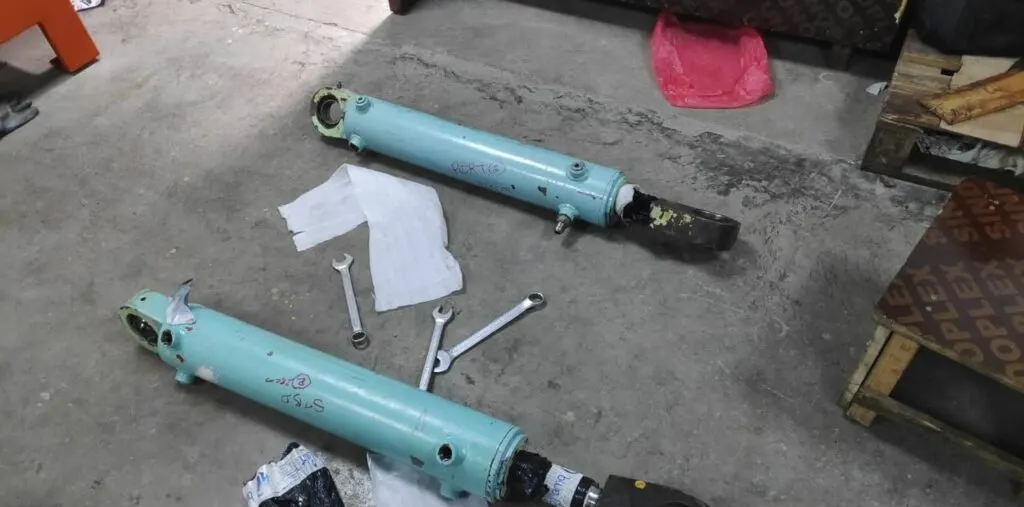
- A hydraulic cylinder that needed a full overhaul, with its gland nut beyond reuse
- A worn clevis bearing at the cylinder mount, allowing play that side-loads the cylinder and wears its seals
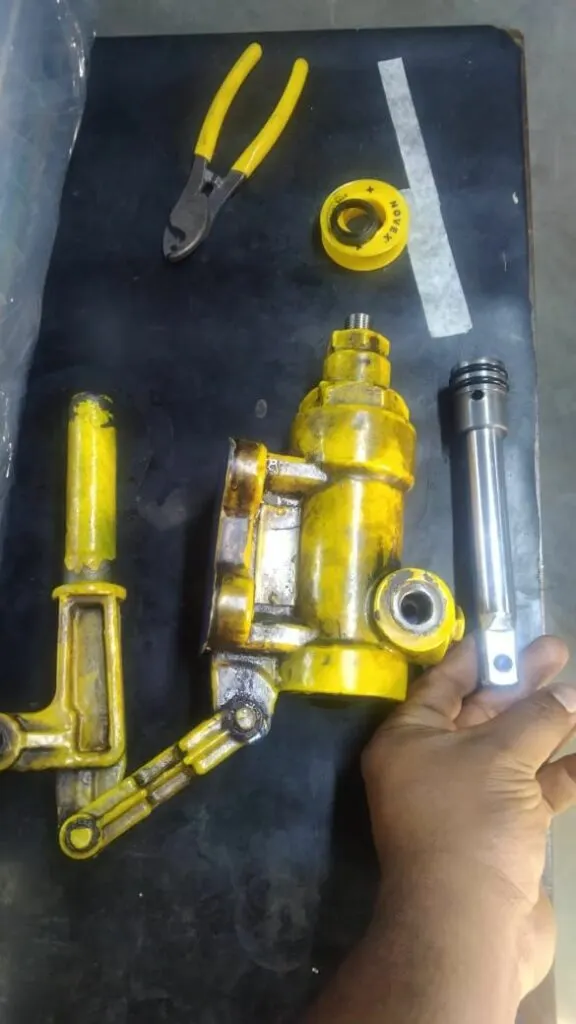
- The directional control valve, which needed stripping and resealing
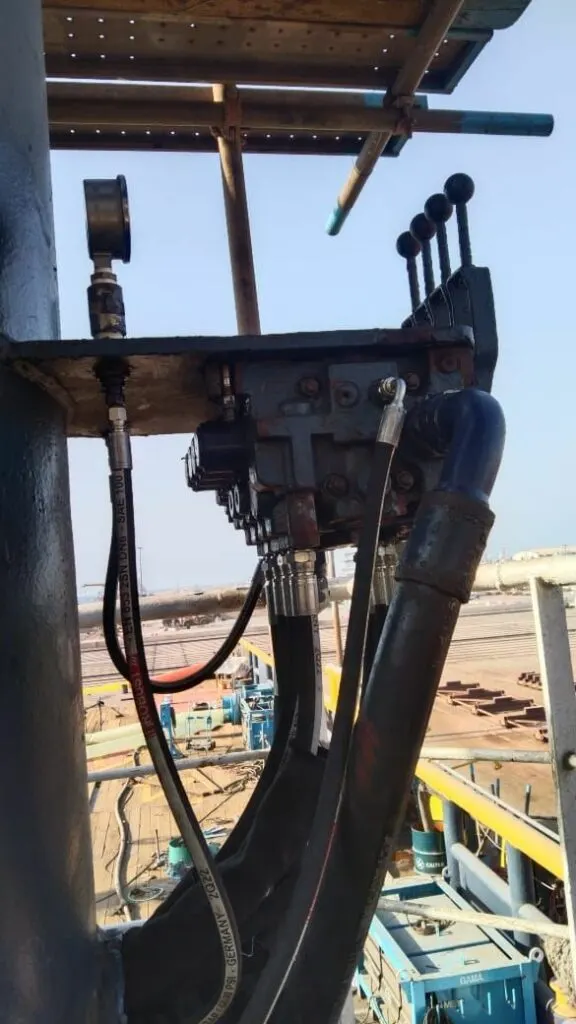
- Hoses and fittings due for renewal
What we did
- Carried out on-board servicing of what could be done in place, and a thorough inspection and functional test of the system
- Removed the cylinder and transported it to our Sharjah workshop
- Stripped, inspected and resealed the cylinder, and fitted a new gland nut made for it
- Bench tested the rebuilt cylinder, returned it to site and refitted it
- Supplied and installed a new clevis bearing
- Removed, overhauled and refitted the directional control valve
- Removed the old hoses and fittings, fitted new ones, and function tested the system
Result
The dredger’s hydraulic system was returned to working order with a rebuilt and tested cylinder, an overhauled valve, a new bearing at the cylinder mount and new hoses. The work ran from the first orders in August 2026 to completion within about three weeks, with additional items quoted after inspection as they were found rather than guessed at the start.
Replacing the worn clevis bearing was as important as rebuilding the cylinder. Play at the mount side-loads the rod and gland, and new seals would have worn out quickly without it.