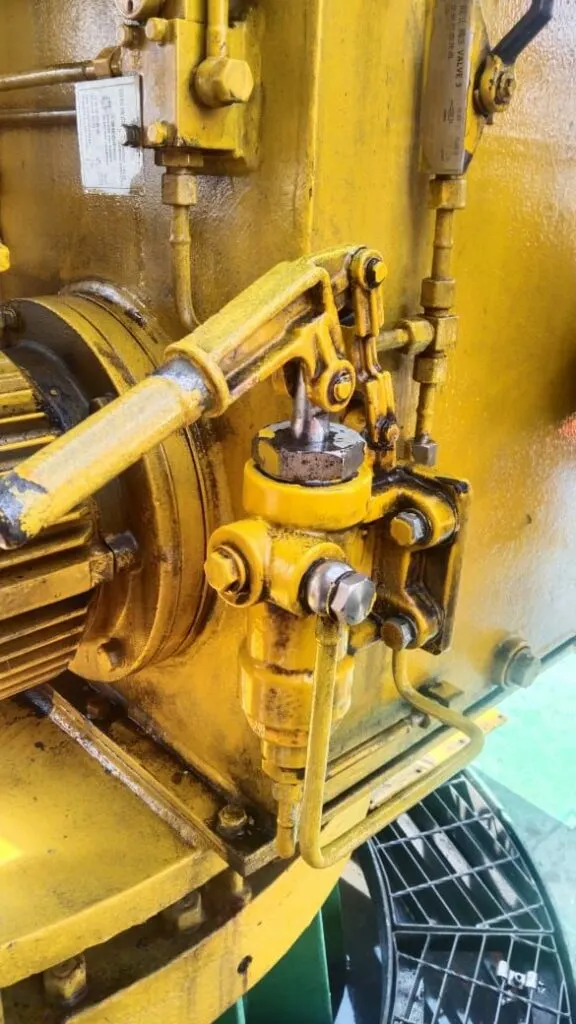
We repair and overhaul hydraulic deck machinery across the UAE: mooring and towing winches, anchor windlasses, capstans, hatch covers, side and stern ramps, and the power units, motors, valves and cylinders that drive them. We work on board alongside, at anchorage and in drydock, with components overhauled in our Sharjah workshop.
Deck machinery lives in the worst conditions on the ship: salt spray, direct sun, sand from cargo and long periods of doing nothing followed by sudden heavy load. Most failures we see start as small leaks or slow motions that were tolerated for months.
What we work on
- Mooring winches with radial-piston or high-speed motors and gearboxes, band brakes and clutch cylinders
- Anchor windlasses and combined windlass-mooring winches
- Capstans and warping heads
- Towing and anchor-handling winches on tugs and OSVs, including brake cylinders and spooling gear
- Hatch covers: folding, side-rolling and lift-away, with their cylinders, hinges, cleats and hydraulic cleating
- Side, stern and internal ramps, shell doors and bow visors
- Shark jaws and towing pins on anchor-handling vessels
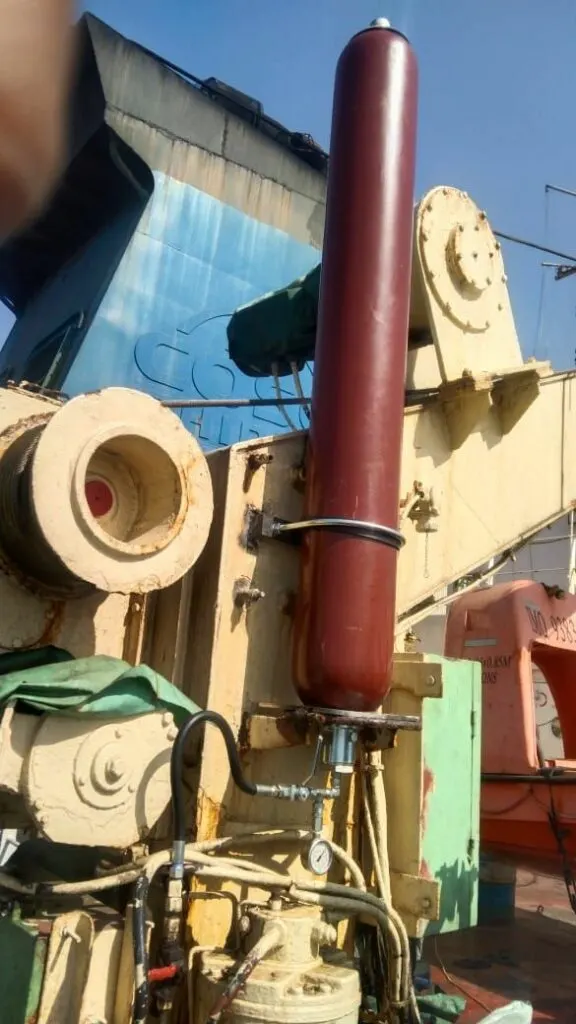
- Deck power units, central or local, with accumulators and coolers
Equipment detail is on our pages for mooring winches and windlasses and hatch covers and ramps.
How the job runs
- Fault list and photos. The machine, its nameplate, the hydraulic power unit, and what it does wrong.
- Quote. A quote for attendance and diagnosis, or a firm quote for a defined overhaul, typically within one working day.
- Troubleshooting on board. Pressure readings on each function, pilot and brake release pressures, motor case drain, oil sample and temperature.
- Report and scope. Findings with photos and readings, and what we recommend.
- Repair. Motors, valves and cylinders removed to the workshop, or repaired in place where practical.
- Test. Function test under load, relief and brake settings, leak checks, and a written record.
What we measure and test
- Motor condition. Case drain flow on radial-piston and axial piston motors. A worn winch motor often still turns freely but cannot hold or pull at rated line pull.
- Line pull and speed against the maker’s data, at a known system pressure.
- Brake holding. Band brake lining condition and brake holding capacity, tested the way the maker or class specifies. Brake release cylinders checked for full release and no drag.
- Hatch cover sequence. Cylinder pressures, sequence valve settings and synchronisation between panels, plus cleating cylinders and compression.
- Counterbalance and load-holding valves on ramps and hatch covers, so a panel cannot run away if a hose fails.
- Accumulator pre-charge on systems that rely on stored energy for emergency functions. Use our accumulator tool for sizing checks.
Common failures in UAE conditions
- Corroded and pitted cylinder rods on hatch covers and ramps left extended in salt air, which then leak at the glands. See cylinder repair.
- Water in oil in deck systems from spray and condensation, causing motor wear and valve corrosion.
- Hot oil in summer in central deck power units, especially on hatch covers working through a full cargo operation.
- Brake band wear and glazing on mooring winches, and seized brake linkages.
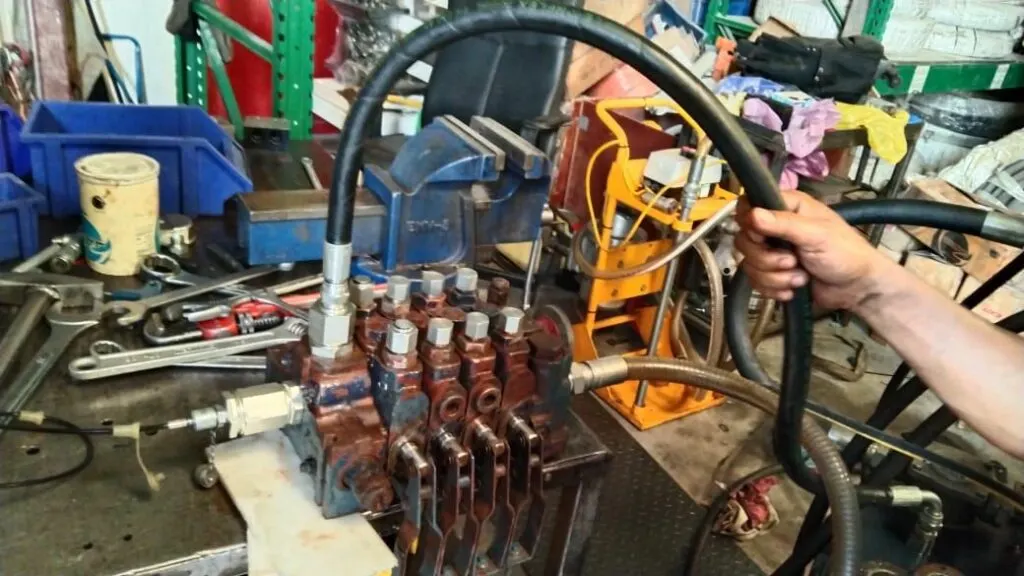
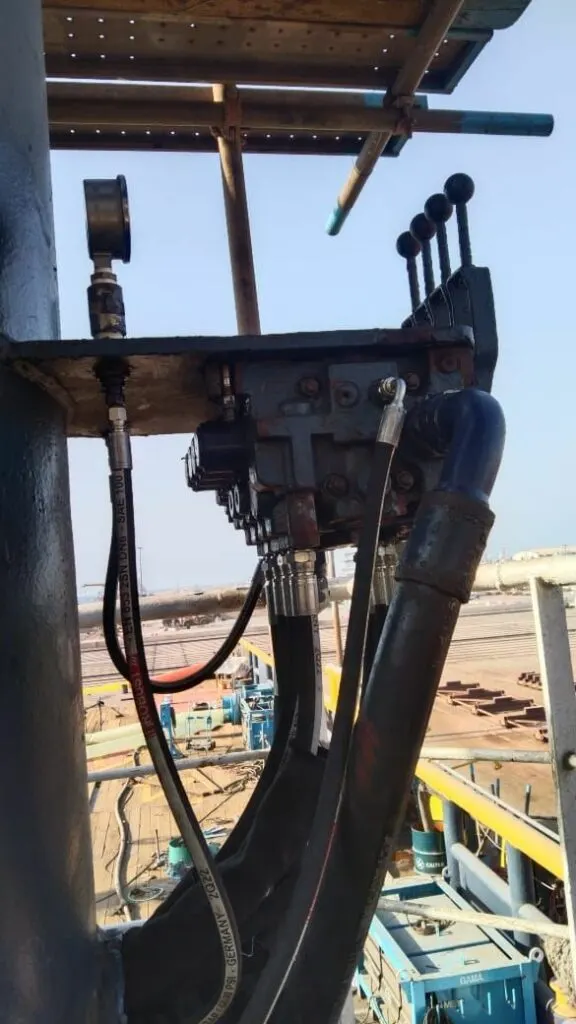
- Hose failures at hinges and on moving panels where hoses flex every cycle. A full re-hose works out cheaper than repeated call-outs; see hose management.
- Radial-piston motor wear from contaminated oil, showing as reduced pull and creep under load.
Wire rope
Where a winch or crane needs new wire, we supply and fit wire rope with its certificate, renew terminations and record the work. The cost of wire rope supply and renewal depends on diameter, construction, length and the terminations needed.
What drives the cost
Deck machinery work ranges widely in scope. A troubleshooting visit and valve repair is at the low end. A mooring winch with motor overhaul, new brake linings and hydraulic re-hosing, or a hatch cover campaign with several cylinders, sits at the high end. Size of components, removal and lifting on deck, parts lead times and the time the vessel can give us are the main factors.
What to send for a fast quote
- Machine type, make and model, with nameplate photos
- Photos of the motor, valve block, power unit and the fault area
- Working pressure, and line pull or SWL if known
- The fault and how long it has been happening
- Vessel location and emirate (berth, anchorage or yard), dates available, and your deadline
Related services
Winch and windlass motors are rebuilt under pumps and motors. For OSVs and tugs, see our page for offshore and OSV operators.