We overhaul, test and troubleshoot hydraulic valves across the UAE: directional control valves, sectional valve banks, counterbalance and relief valves, solenoid valves, and the valve remote control systems (VRCS) on tankers and gas carriers. Work is done in our Sharjah workshop or on board, and every valve leaves with its settings and test results written down.
Valves cause more confusing faults than any other part of a hydraulic system. A crane that creeps, a hatch that drops, a cargo valve that will not report “open”: all can come from a few microns of wear on a spool or a dirty pilot orifice. Our job is to find which valve, prove it, and fix it once.
What we work on
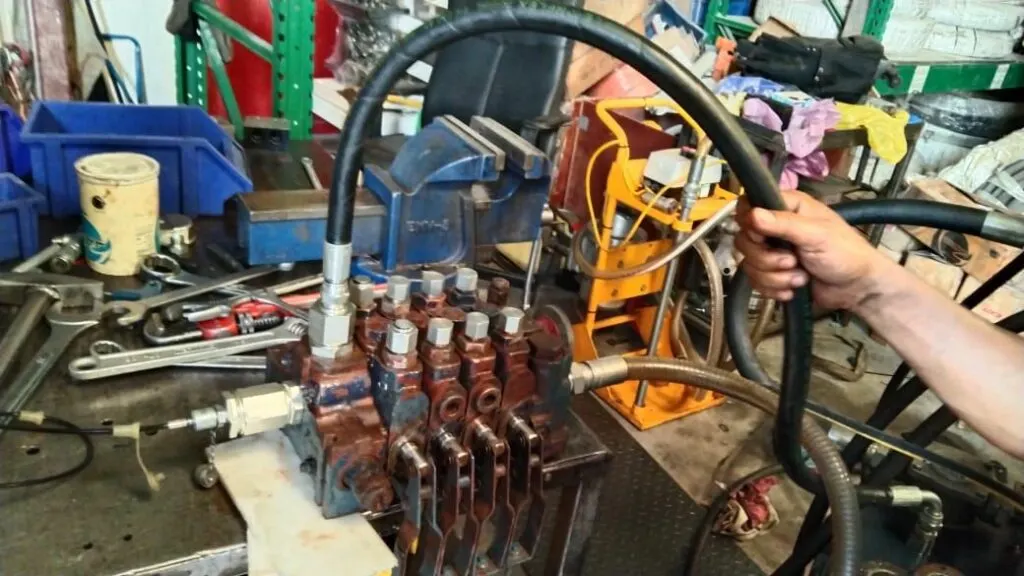
- Directional control valves, manual, hydraulic pilot, solenoid and proportional, in mono-block and sectional (stack) form
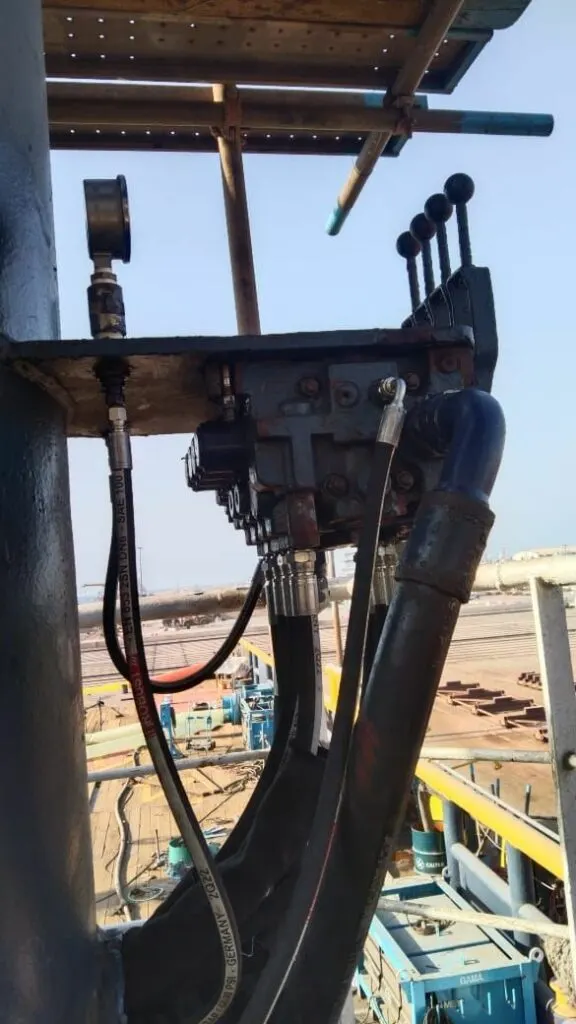
- Crane and deck machinery valve banks, including load-sensing sectional valves and their compensators
- Counterbalance and load-holding valves on luffing, telescopic and winch circuits
- Pressure relief, reducing and sequence valves, cartridge and sub-plate types
- Check valves, pilot-operated checks and flow controls
- Solenoid valves and coils, including those in VRCS solenoid cabinets
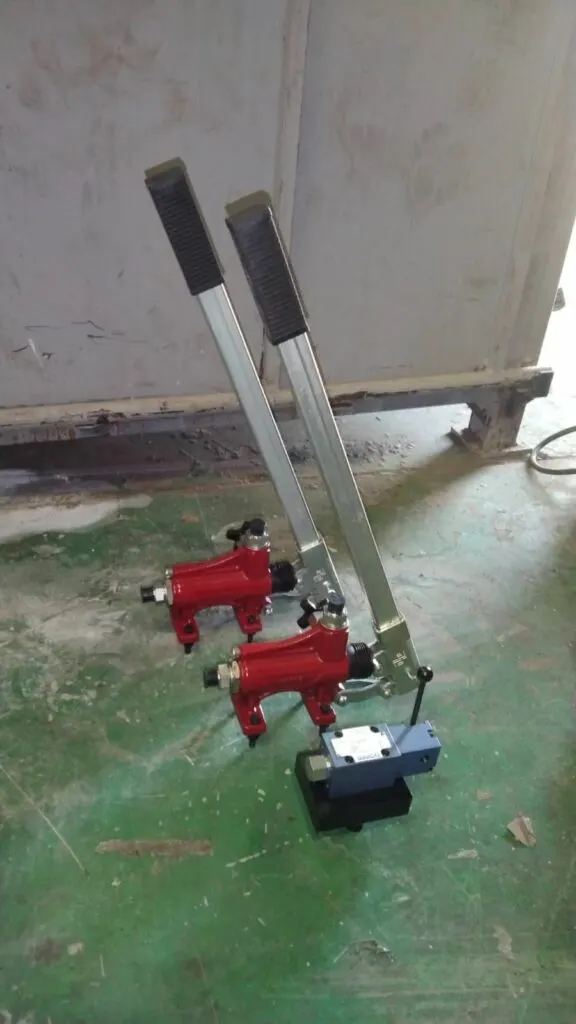
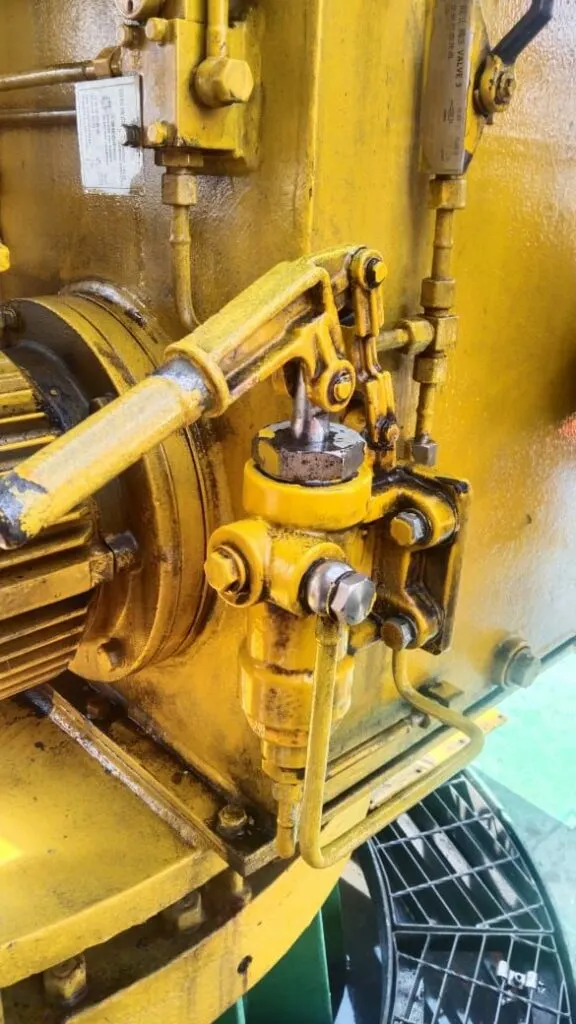
- VRCS on tankers: hydraulic actuators on cargo and ballast butterfly and gate valves, the solenoid valve cabinets, the hydraulic power pack, hand pumps for emergency operation, and position indication
How the job runs
- Symptoms and drawings. Tell us what the machine does wrong. The hydraulic circuit diagram (ISO 1219 symbols) saves a lot of time, so send it if you have it.
- Quote. For a single valve or bank, an outline quote typically within one working day of photos and part numbers. For VRCS we usually survey first and quote a campaign.
- Troubleshoot on site where needed. Pressure readings at test points, pilot pressures, coil checks and isolation tests to pin down the faulty valve before anything is removed.
- Strip-down and inspection. Spools, bores, seats, poppets and springs are cleaned and inspected. You get photos and a firm scope.
- Repair. Reseal, replace springs, seats, cartridges or coils, and lap or replace spools where practical. If a body is worn beyond use, we say so and source a replacement.
- Bench test and set. Relief and counterbalance settings, internal leakage, and function under pressure.
- Refit and commission. Settings re-checked in the real circuit, with a written record.
What we test and measure
- Internal leakage across spools and seats at pressure. Spool-to-bore clearances on industrial valves are only a few microns, so a small amount of wear shows as drift or a slow actuator long before anything leaks externally.
- Relief and counterbalance settings, cracking pressure and stability. A counterbalance valve set wrongly, or with a contaminated pilot, makes a luffing cylinder judder or creep.
- Pilot pressures and response on pilot-operated and proportional valves.
- Solenoid coils: resistance, insulation and voltage at the coil under load. Low voltage at a coil at the end of a long cable run is a common hidden cause.
- Seat and poppet condition on check and load-holding valves.
VRCS on tankers
A valve remote control system lets the cargo control room open and close cargo and ballast valves through hydraulic actuators. When it misbehaves, cargo operations slow down and terminals take notice.
Typical faults we find are leaking actuator seals that let water and seawater into the hydraulic side, actuators that stall part-way, solenoid valves sticking in the cabinet, a tired power pack or accumulator, wrong or lost position feedback, and contaminated oil spread through long small-bore pipe runs.
A VRCS job is usually a campaign rather than a single repair: survey and test every actuator, record opening and closing times and position feedback, overhaul or exchange the worst actuators, service the power pack and accumulators, and flush and re-test. Campaigns are quoted per vessel and scope and are a much larger job than a single valve. They are often timed for a drydock or a port stay at Fujairah or Khor Fakkan anchorage.
Common failures in UAE conditions
- Contamination is the main cause of spool sticking and pilot faults. Fine dust and wear debris collect in small orifices.
- Heat thins the oil, which increases internal leakage and makes relief valves seem to “go soft” in the afternoon.
- Corrosion on exposed deck valve banks, levers and solenoid connectors in salt air.
- Water in oil from humid air and leaking actuator seals, which corrodes spools and degrades oil.
What drives the cost
For single valves and valve banks, the cost depends on the number of sections, whether spools and bodies are recoverable, availability of seal kits and cartridges, the time spent finding the fault on board, and whether proportional electronics are involved. VRCS campaigns are quoted on the number of actuators, access, and the time the vessel can give us.
What to send for a fast quote
- Photos of the valve or bank and all nameplates and part numbers
- The machine or vessel and what the valve controls
- Working pressure and the symptoms you see
- The hydraulic circuit diagram, if available
- For VRCS: number of actuators, their make and size, and the fault list
- Emirate, vessel or site location, and your deadline
Related services
Valve faults often go together with contaminated oil from a worn pump or a neglected power unit. For faults you cannot pin down, book an engineer attendance day. If a load is drifting, read what causes cylinder drift: the valve is often the cause.