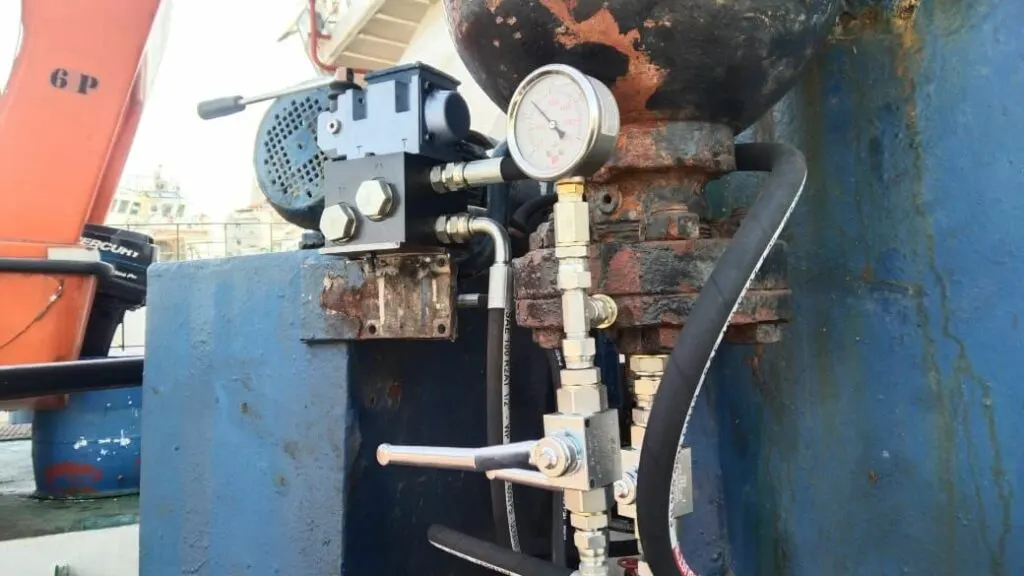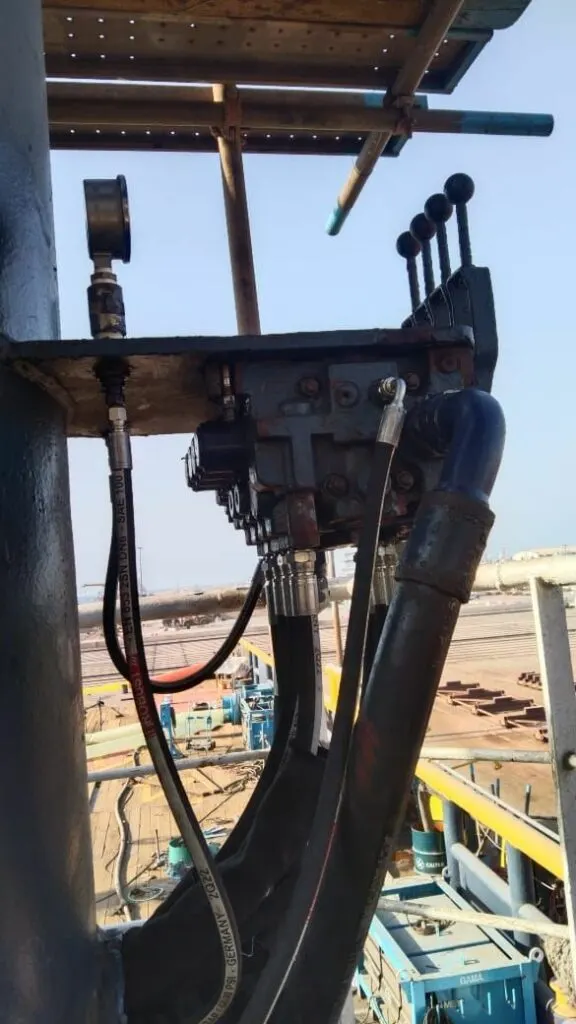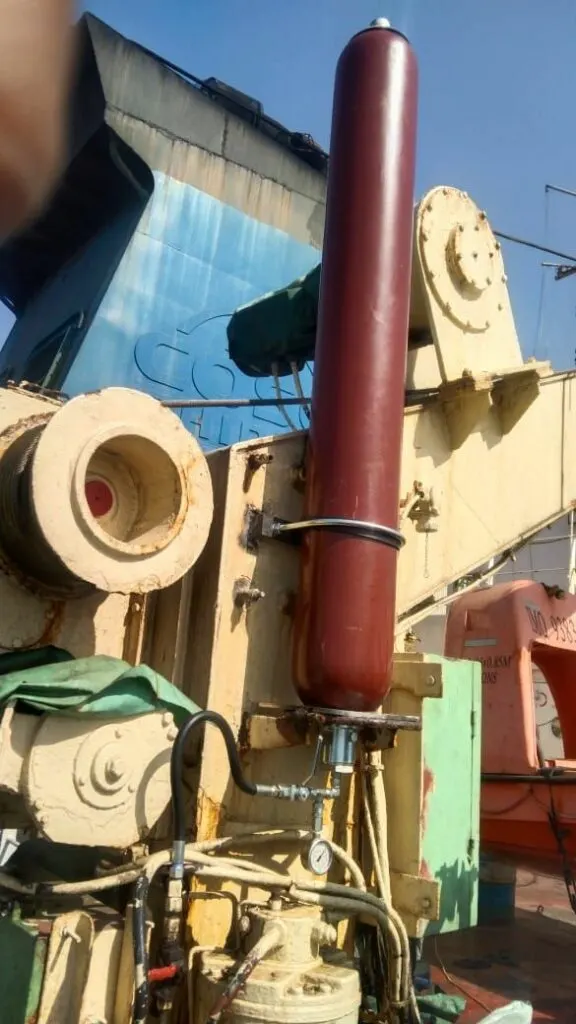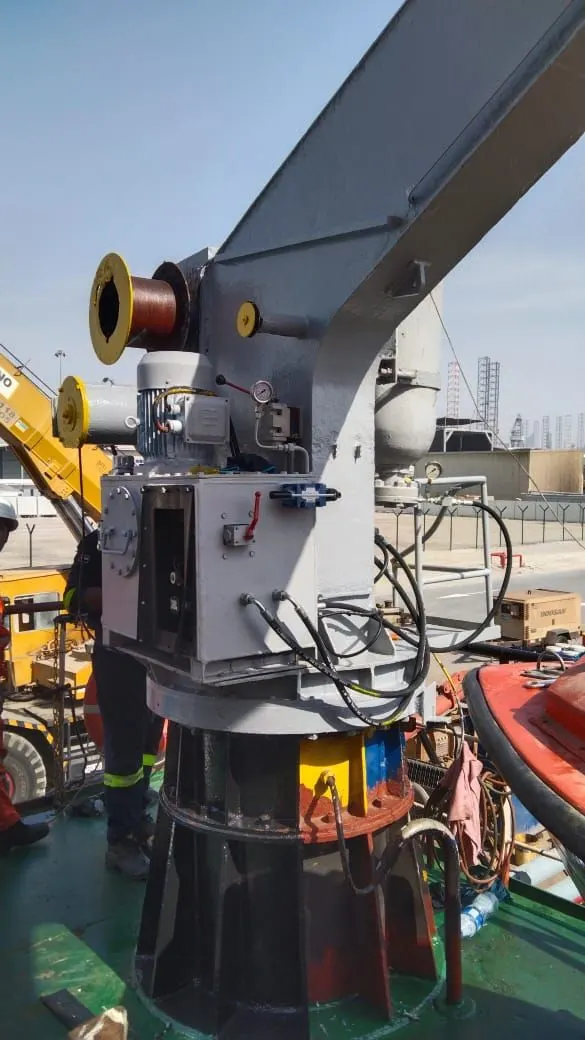
We repair and test the hydraulic and lifting equipment on managed vessels calling at UAE ports and anchorages: steering gear, deck cranes, davits, hatch covers, winches and power packs. Most of the work is planned around a port call or a drydock, and every test comes with a report your class surveyor and your office can file.
The superintendent’s problem
A technical superintendent looks after several ships, rarely stands on any of them, and is judged on off-hire days, survey findings and the repair budget. Hydraulic defects arrive as a crew report, a condition of class or PSC deficiency, or a survey window that is coming up regardless.
The UAE is a practical place to clear these items. Ships call at Jebel Ali, Khalifa Port, Port Rashid, Hamriyah and Mina Saqr, lie at the Fujairah and Khor Fakkan anchorages for bunkers and stores, and dock in Dubai and Abu Dhabi. What matters is that the job is scoped before arrival, done within the stay, and closed out with paperwork that answers the surveyor.
The equipment we work on aboard
On bulk carriers, tankers, container ships, general cargo and gas carriers, the hydraulic and lifting systems we see most are:
- Steering gear: ram type and rotary vane units, their pumps, valve blocks and telemotor or electro-hydraulic controls.
- Deck cranes: electro-hydraulic cranes on bulk and general cargo ships, provision cranes and hose-handling cranes on tankers.
- Hatch covers: folding and side-rolling covers, their cylinders, cleats and power packs.
- Mooring and anchoring: hydraulic winches, windlasses and capstans.
- Valve remote control systems (VRCS) on tankers, including the actuators in the cargo and ballast lines.
- Lifeboat and rescue boat davits, accommodation ladders, gangways and pilot ladder winches.
- Accumulators on deck machinery and emergency systems.
Failures and pressure from class, flag and PSC
Most hydraulic problems on ships develop slowly: seals harden, rods pit, oil picks up water, and the system works until an inspection notices. In the Gulf it happens faster, with 45 to 50 C on deck, humid nights and fine dust ageing oil, seals and hoses.
The pressures we see managers responding to:
- SOLAS steering gear tests. Steering gear must be checked and tested within 12 hours before departure, and emergency steering drills held at least every three months. Class also checks the hard-over time at surveys. A slow pump, an internally leaking ram or a sticking valve shows up here. See our steering gear service and the guide on steering gear SOLAS tests.
- Davit five-yearly dynamic tests and annual thorough examinations under SOLAS. Missed dates become PSC deficiencies. See davit load testing.
- Crane load tests at the intervals set by flag and class, typically with water bags and a calibrated load cell. See load testing.
- Oil leaks and hose condition. Visible leaks on deck machinery and weeping hoses are easy findings for a PSC officer and a pollution concern for charterers.
- Condition of class on hatch covers, steering or cranes, with a deadline that rarely fits the trading pattern.
How we work with ship managers
Planned work during a port call. You send the defect list, photos and nameplates. We quote within one working day, plan materials in our Sharjah workshop, and attend on arrival with the parts and test gear needed. Cylinders, pumps and valves that need a bench are taken ashore and returned within the port stay where the timing allows; when it does not, we agree a plan before work starts.
Drydock work. For a docking, we quote the hydraulic and lifting items on your specification separately, so they can be compared line by line. Typical scope: steering gear overhaul, crane cylinder reseals, hatch cover cylinder renewal, winch motor overhaul, re-hosing of deck machinery and load tests before undocking.
Breakdowns. When a crane fails mid-cargo or a steering pump trips, we send an engineer to troubleshoot first. We tell you plainly whether it can be fixed on site, needs the bench, or needs a spare with a lead time.
Anchorage work. At Fujairah and Khor Fakkan we attend by launch boat with tools and spares, coordinated with your agent. See Fujairah and Khor Fakkan.
Reports for class. Test reports list the equipment, nameplate data, test loads, pressures, load cell certificate and results, with photographs. Our tests are regularly witnessed by class surveyors from DNV, Bureau Veritas, Lloyd’s Register and ABS, and we can coordinate the surveyor’s attendance with your agent.
Services that matter most to managers
| Need | Where to start |
|---|---|
| Steering gear service and seal renewal | Steering gear service |
| Deck crane repair and troubleshooting | Crane hydraulics |
| Crane and davit load tests | Load testing, Davit load testing |
| Leaking or drifting cylinders | Hydraulic cylinder repair |
| Tanker valve remote control | Valves and VRCS |
| Fleet-wide hose replacement | Hose management |
| Winches, windlasses, hatch covers | Deck machinery and winches |
For ships trading regularly to the Gulf, a vessel-wide hose integrity programme is often the best value: survey and tag on one call, fit replacements at the next.
What to send for a quote
The faster and more complete the information, the more accurate the quote and the fewer surprises on board:
- Vessel name, IMO number, port or anchorage and ETA.
- The defect description, including when it started and what the crew has tried.
- Photographs of the equipment, the nameplate and any visible leaks.
- Make, model and SWL of cranes and davits, and the date of the last load test.
- For pumps and motors, the nameplate model code; for cylinders, bore, rod and stroke if known.
- The class society and whether a surveyor needs to witness.
Our guide on what to send for a hydraulic quote has a fuller checklist.
We focus on overhauls, load tests and planned work rather than single-hose call-outs. If a ship needs one hose made up at the berth, a local hose shop will usually be quicker; for anything wider, we are a better fit.