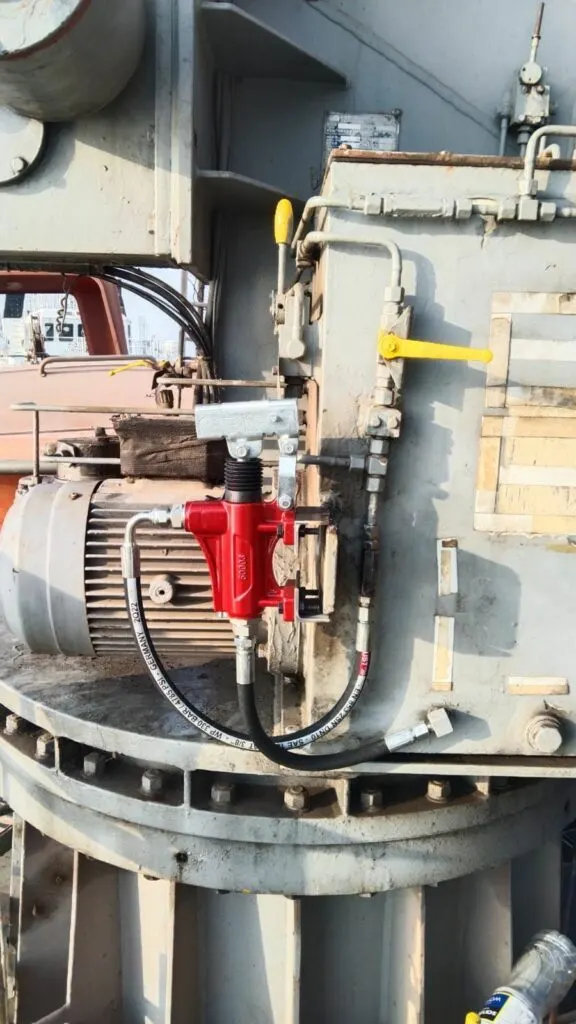
We repair and test the hydraulic and lifting equipment on offshore support vessels, anchor handlers, lift boats, accommodation and work barges and offshore cranes operating out of the UAE. Most of our offshore work is in Abu Dhabi, around Mussafah and the supply bases, and we attend at the quay, in the yard or offshore when the job needs it.
The operator’s world
An OSV or barge operator in the UAE lives between charter commitments and inspections. Vessels work long contracts for oil and gas majors and their contractors, often with little time alongside. A crane, towing pin or A-frame out of service means the vessel cannot do the job it is chartered for, and off-hire starts quickly.
Charterers expect evidence that lifting and deck equipment is maintained and tested. Offshore vessel inspections such as OVID and CMID, the charterer’s own audits and the requirements passed down by operators such as ADNOC to their marine contractors all ask for current certificates, recent load tests and a maintenance record. The question in an audit is rarely “does it work” but “show me when it was last tested and by whom”.
Equipment we work on
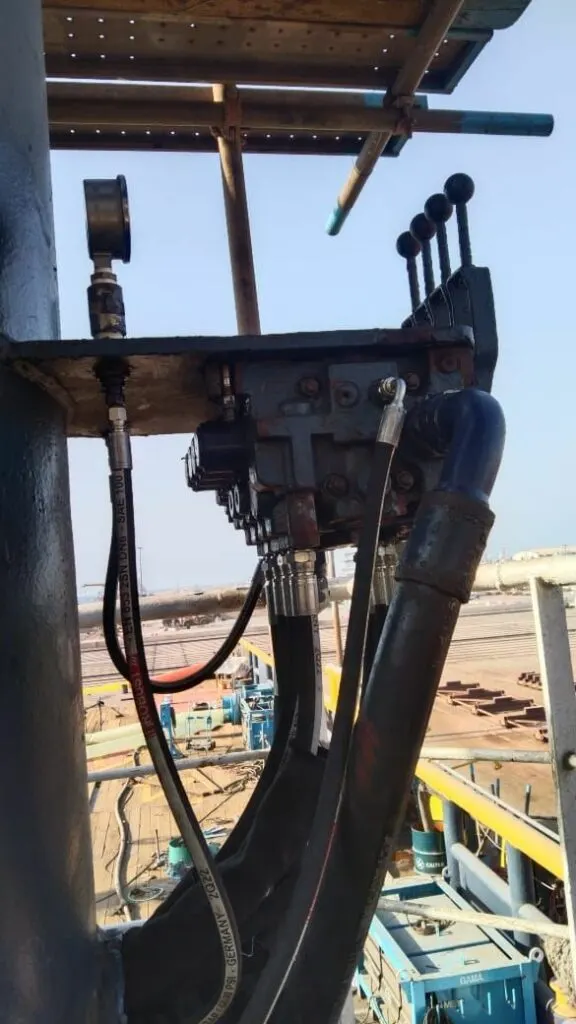
- Offshore and deck cranes: knuckle-boom, telescopic and lattice-boom cranes on OSVs, barges and platforms, their luffing, telescopic and folding cylinders, slewing motors and control valves. See offshore cranes and A-frames.
- A-frames and stern frames on survey, diving and anchor handling vessels.
- Shark jaws and towing pins on AHTS vessels, and the cylinders and power packs that drive them.
- Anchor handling and towing winches, tugger winches and capstans, with their radial-piston and orbital motors.
- Power packs (HPUs) and accumulators for deck machinery and emergency systems.
- Davits, rescue boats and fast rescue craft launch systems.
What fails offshore, and why
Offshore hydraulics work hard in a harsh place. The failure modes we see most:
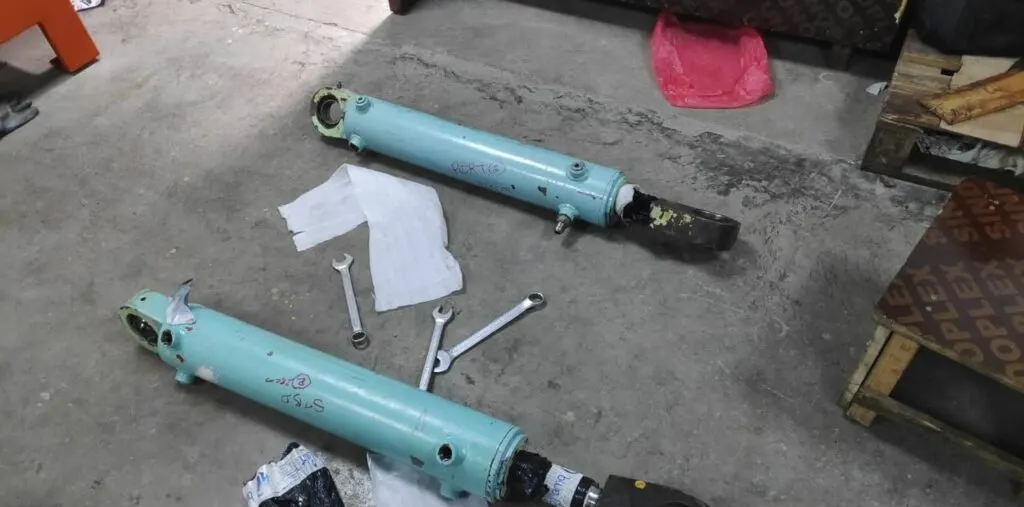
- Rod pitting and seal failure on crane and A-frame cylinders exposed to spray and sun. Pitted chrome cuts new seals quickly, so a reseal alone does not last. Our cylinder repair page explains when a rod needs re-chroming.
- Water in oil, from condensation in reservoirs that heat up by day and cool at night, and from worn wiper seals. It shortens pump life and causes valve sticking.
- Contamination from repeated hose changes done in a hurry on deck. Our ISO 4406 guide explains the codes.
- Overheating in UAE summer conditions, especially on HPUs in enclosed spaces with undersized coolers. See hydraulic overheating in UAE heat.
- Hose failures, from UV, abrasion against deck structure and age. A burst hose on deck is a safety and pollution incident, which is why we recommend a planned hose management programme rather than replacing hoses one by one.
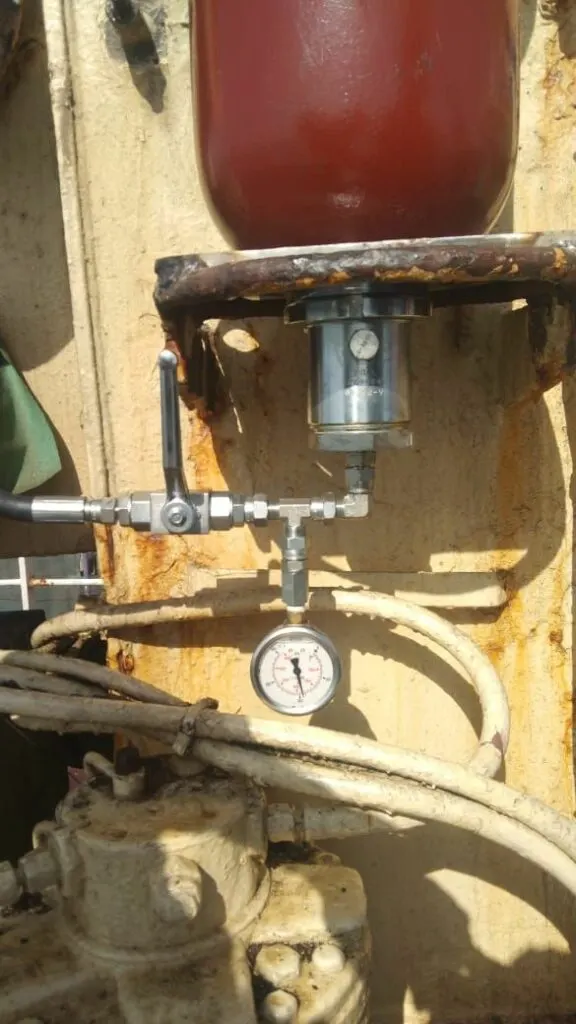
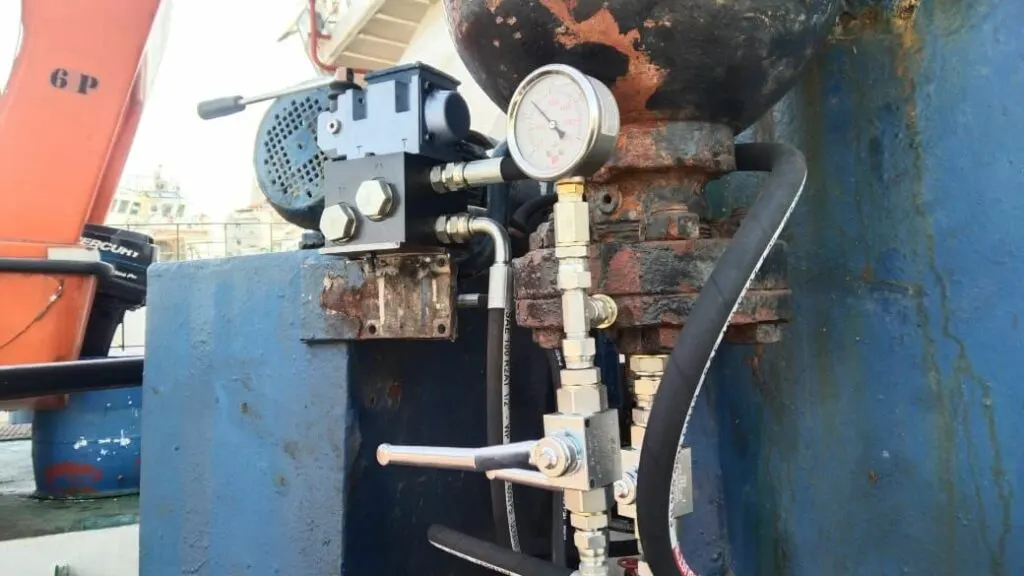
- Accumulator pre-charge loss, which reduces emergency stored energy on towing pin and shark jaw systems. See our accumulator safety guide.
How we work with offshore operators
Alongside and in the yard. Most planned work is done when the vessel is in port between jobs or in a yard period. We strip cylinders on board where practical, take them to our Sharjah workshop for measurement, reseal and bench test, and return them with a test report. Large cylinders that need re-chroming or honing go to our machining partners; we manage that and tell you the extra time up front.
Offshore attendance. For troubleshooting a crane or deck system on location, an engineer travels with the crew change or on a supply run, with tools, test gauges and likely spares. See engineer attendance for how day rates and offshore days are charged.
Load testing before charter. We carry out proof load tests with water bags and calibrated load cells up to 150 t, for cranes, A-frames, davits and lifting points, and we inspect loose lifting gear. Our tests are regularly witnessed by class surveyors from DNV, Bureau Veritas, Lloyd’s Register and ABS, and the report sets out the loads, durations and results clearly for the audit file. See load testing and the guide on preparing for a crane load test.
Breakdowns. When a vessel is down, we troubleshoot first and quote the repair second, so you are not paying to replace parts on a guess.
Services that matter most
| Equipment | Service |
|---|---|
| Crane and A-frame cylinders, towing pins, shark jaws | Hydraulic cylinder repair |
| Winch and slewing motors, HPU pumps | Pumps and motors |
| Offshore cranes and their controls | Crane hydraulics |
| Power packs and accumulators | Hydraulic power units |
| Annual and pre-charter tests | Load testing |
| Re-hosing a vessel or crane | Hose management |
| Wire rope on cranes and winches | Crane hydraulics |
What to send for a quote
- Vessel or unit name, location and when it is available.
- The equipment and its make, model and SWL, with photographs of the nameplates.
- The symptom: slow, drifting, leaking, noisy, overheating, not responding.
- For cylinders: bore, rod and stroke if known, and a photo of the rod surface.
- For load tests: SWL, radius range, the last test certificate and the class society.
- Any charterer or audit deadline you are working to.
We focus on overhauls, load tests and planned work rather than single-hose call-outs; for one hose, a local hose shop is faster.