We send hydraulic engineers to vessels, ports, yards and plants across the UAE for troubleshooting, offshore attendance, planned shutdowns and drydock work, quoted per attendance or as day rates. Engineers attend in all seven emirates, at Fujairah and Khor Fakkan anchorages and offshore, with test gauges, flow and temperature instruments and a written report at the end.
Engineer attendance is for jobs where the problem is not yet clear, or where you need hands and judgement for a fixed period rather than a single component repair.
When to book an attendance
- A fault nobody has pinned down: a crane that is slow, a hatch cover that drops, a winch that overheats, a steering gear that hunts
- Before a big decision: whether to overhaul or replace a pump, a power unit or a whole crane
- Before a survey or inspection: a health check on hydraulics so there are no surprises in front of the surveyor or vetting inspector
- Offshore attendance: OSVs, barges and offshore installations that cannot come alongside
- Drydock and planned shutdowns: a team for a defined scope and period, working alongside yard and ship staff
- Commissioning: after a repair or a new installation, to set and record pressures and functions
What the engineer brings and measures
A good diagnosis is mostly measurement. Our engineers carry calibrated pressure gauges and test hoses, and measure as needed:
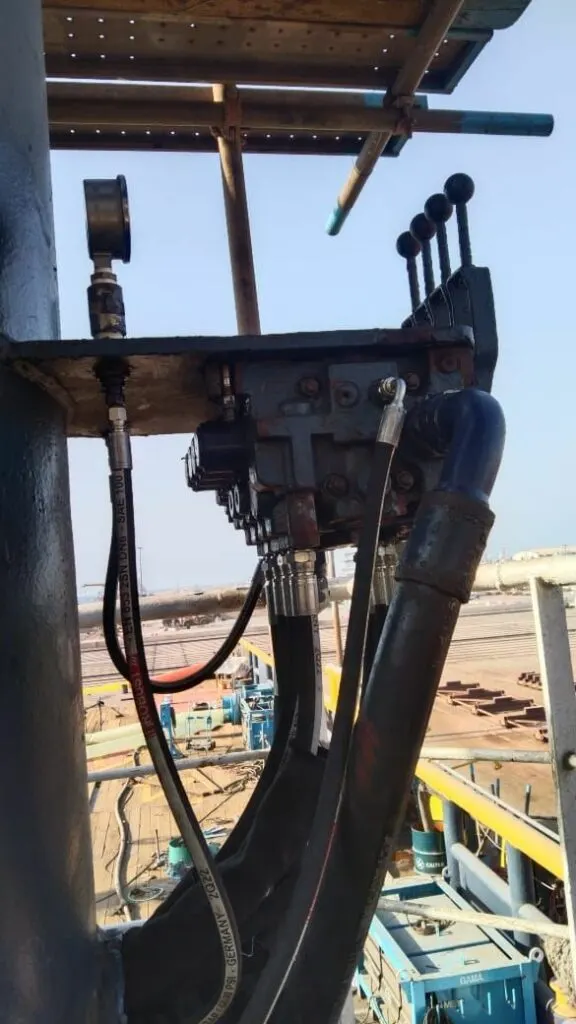
- Pressures at test points on each function, including pilot, load-sensing and brake release pressures
- Flows, including pump case drain flow, which is one of the best indicators of internal wear
- Temperatures of oil in the tank, at the pump and across coolers, and surface temperatures to find a hot component
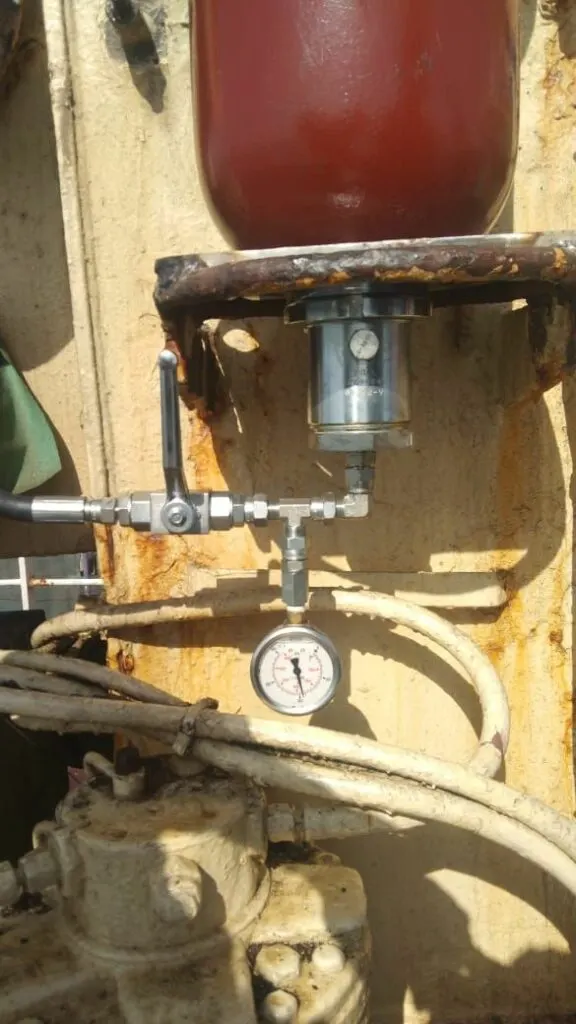
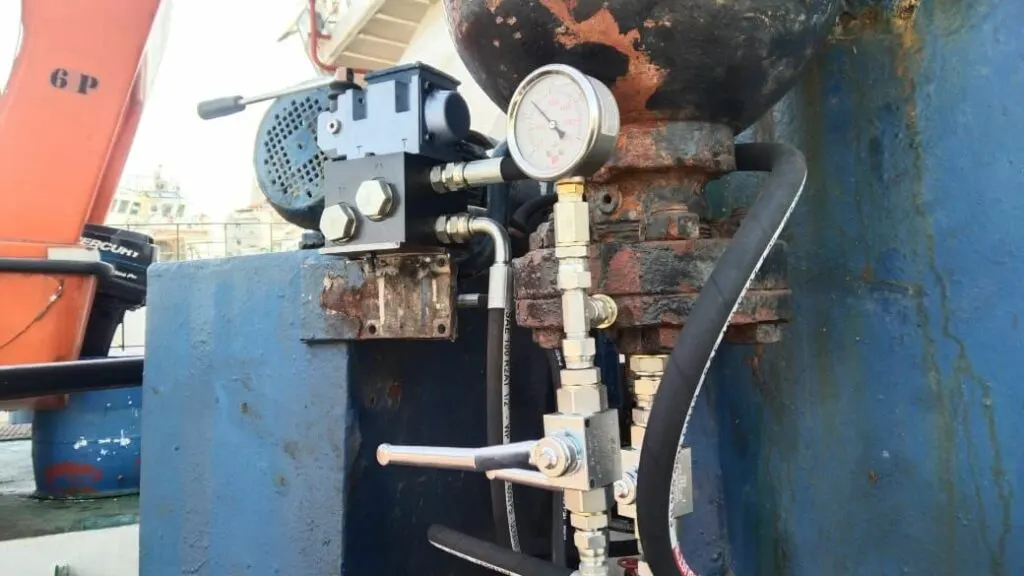
- Accumulator pre-charge, with a charging and gauging kit and nitrogen
- Oil condition, with a sample sent for analysis against an ISO 4406 cleanliness code and water content where needed
- Cylinder drift under load, isolated from valves to tell seal bypass from valve leakage
- Electrical checks on solenoid coils and switches that drive the hydraulics, working with the vessel’s electrician where the fault is in the controls
We read the circuit using the system’s hydraulic diagram (ISO 1219 symbols), so send it in advance if you have it.
How an attendance runs
- Brief. Tell us the equipment, the symptoms, when it started, what has already been tried, and share the hydraulic diagram if you can.
- Quote. A quote per attendance or a day rate, typically within one working day.
- Attendance. Measurements, isolation tests and inspection to find the cause. Small repairs and adjustments are made on the spot where parts allow.
- Report. A written report with readings, findings, photos and a recommended scope, with a quote for the follow-up work.
- Follow-up. Components go to our Sharjah workshop for overhaul, and the engineer returns to refit, commission and, if needed, load test.
Faults we find most often
- Hot oil: fouled coolers, oil grades too light for UAE summer heat, or oil passing over a relief valve. See hydraulic overheating in UAE heat.
- Worn pumps with high case drain flow. See the noisy hydraulic pump guide.
- Passing valves: relief, counterbalance and directional valves letting oil through. See valves and VRCS.
- Bypassing cylinders: piston seals worn or damaged. See cylinder drift causes.
- Flat accumulators, which cause slow or weak functions and pressure spikes.
- Contaminated oil after a previous failure that was not cleaned up.
- Control faults: dead coils, low voltage at solenoids, stuck pilot valves.
Planned shutdowns and drydock
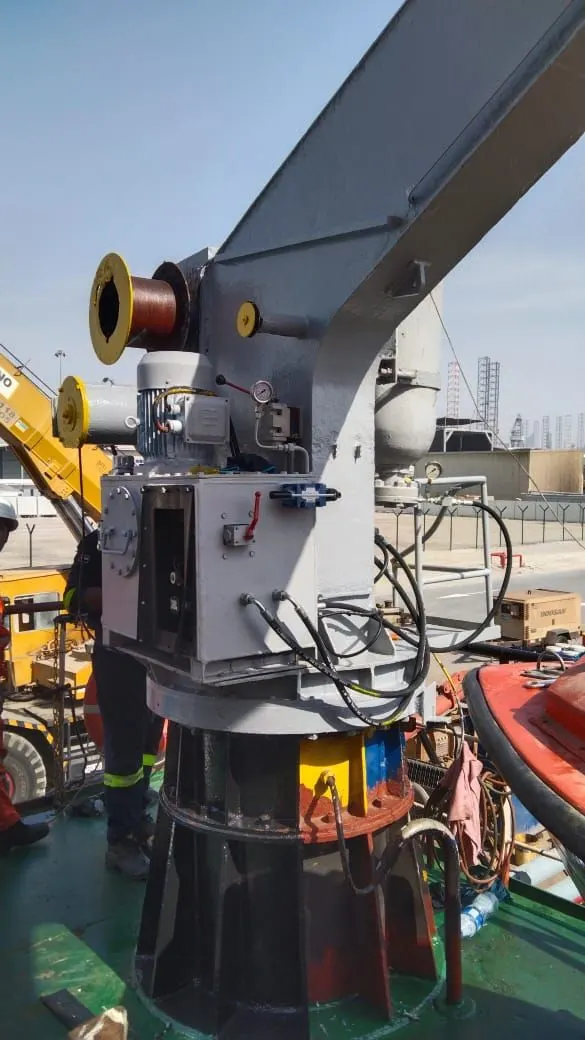
For drydock and shutdowns we agree a scope list in advance, plan parts and workshop capacity, and attend for the agreed period. Typical drydock scopes include steering gear seal renewal, deck crane overhaul and load testing, hatch cover cylinder campaigns, winch motor overhaul, VRCS actuator overhaul and full re-hosing. Day rates make planning simple, and we give a daily progress note so the superintendent knows where things stand.
What drives the cost
Attendance is quoted per visit or as a day rate. The cost depends on location and access (berth, anchorage launch, offshore transfer), the number of engineers, the duration, standby time waiting for the vessel or permits, and any parts used on the day.
What to send for a fast quote
- The equipment and its make, model and nameplate photos
- Symptoms, when they started and what has been tried
- The hydraulic diagram, if available
- Vessel or site, emirate, and access arrangements (berth, anchorage, offshore)
- Date and how long the equipment can be stopped
See our full checklist: what to send for a hydraulic quote.