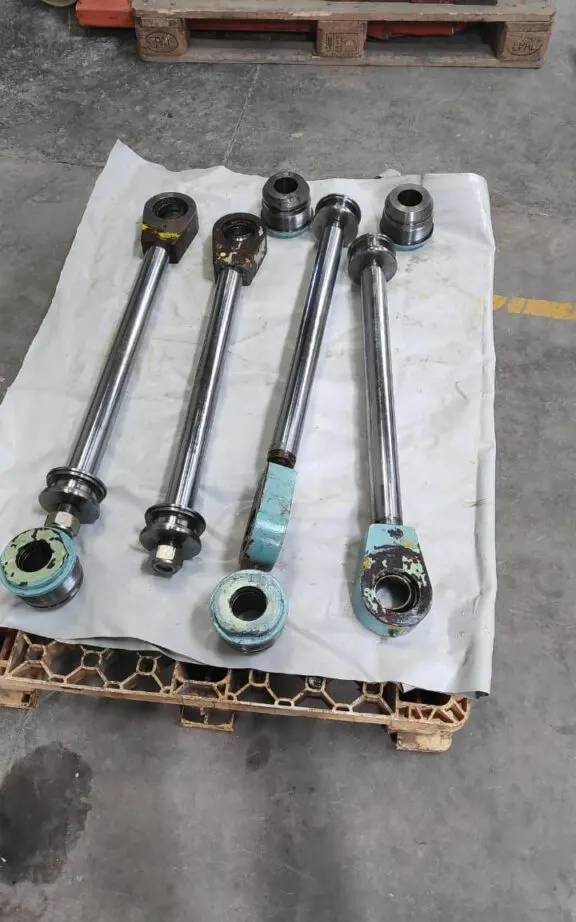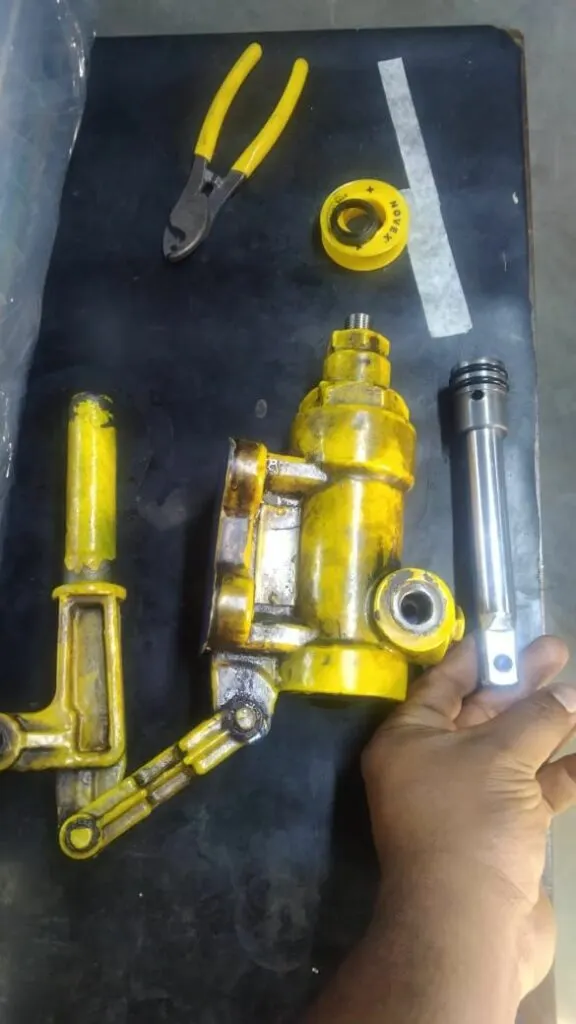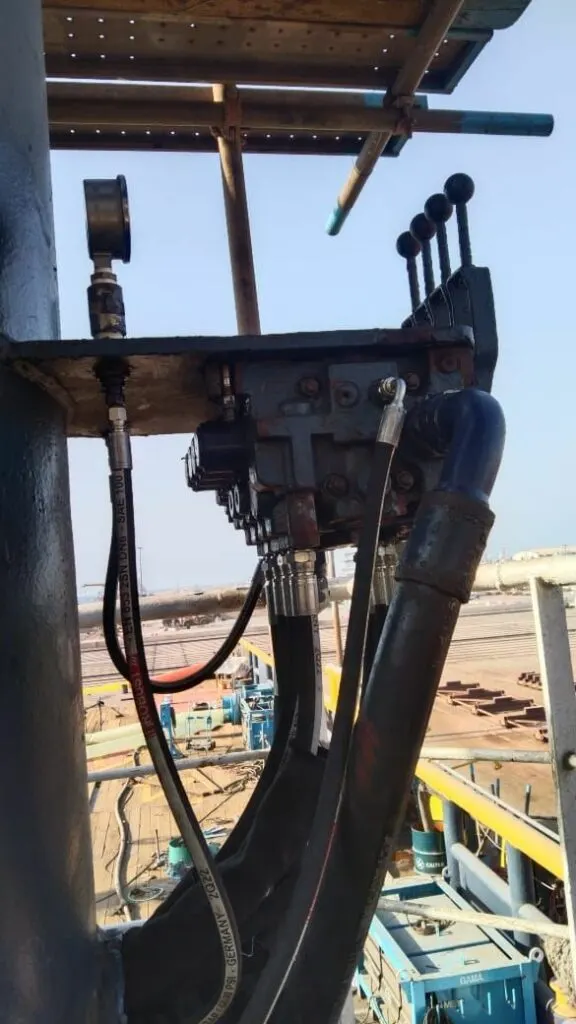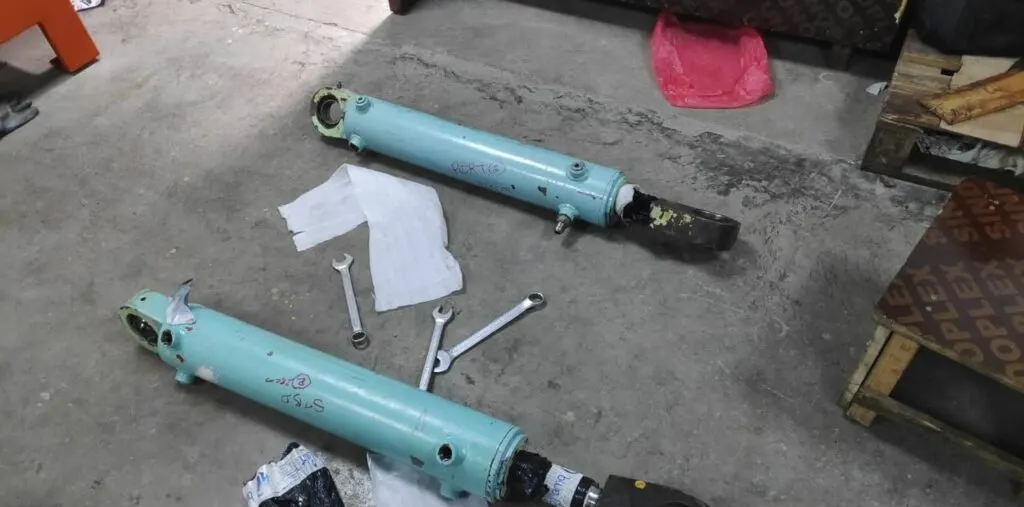
We repair and overhaul hydraulic cylinders for ships, offshore vessels, ports, cranes and construction plant across the UAE, from our workshop in Sharjah and on site in all seven emirates. Every cylinder is stripped, measured, rebuilt and pressure tested on the bench at 1.5 times its working pressure, and you get a written report with the measurements, photos and test record.
Most of our cylinder work comes from technical superintendents and plant managers who need a crane, hatch cover or steering gear back in service and need paperwork a surveyor or insurer will accept. The report is written for that reader.
Cylinders we work on
- Crane luffing, telescopic and knuckle-boom cylinders, including slewing and jib cylinders on provision and hose-handling cranes
- Steering gear rams and their glands
- Hatch cover, side ramp and shell door cylinders
- Shark jaw, towing pin and stern roller cylinders on anchor-handling and towing vessels
- Lifeboat and rescue boat davit cylinders
- Construction plant cylinders: excavators, piling rigs, loaders, mobile crane outriggers
- Press, tipper and industrial machine cylinders
Bore sizes range from small single-acting units to large crane cylinders that need a crane and a long bench to handle. If the cylinder can be removed and transported, we can usually strip it in the workshop. Where removal is impractical, such as some steering rams, we reseal in place.
How a cylinder job runs
- Photos and data. You send photos of the cylinder and its nameplate, the bore × rod × stroke if known, the working pressure, the machine or vessel, the emirate and your deadline.
- Quote. We reply with an outline quote, usually within one working day of receiving photos and nameplate data. It covers strip-down, reseal and test, with quoted options for parts we may find worn.
- Collection or removal. We remove the cylinder on board or on site, or you deliver it to the Sharjah workshop.
- Strip-down and inspection report. We dismantle, clean and measure every wear surface, then send a short report with photos and a firm scope before any parts are ordered.
- Repair. Reseal with a new seal kit, and replace or recondition rod, gland, piston or barrel as agreed. Hard-chrome re-plating and honing go to our machining partners.
- Bench test. Pressure test at 1.5 times working pressure, hold, and check for external leakage and internal bypass.
- Report and return. Test report, measurements and photos, then delivery and re-installation if required.
What we measure
The inspection report is not a tick sheet. For each cylinder we record:
- Rod: diameter at several points along the stroke, straightness (run-out on rollers), chrome condition, pitting, scoring and any flaking. A rod with pitting through the chrome will cut new seals within weeks, so we do not reseal over it.
- Barrel bore: diameter at several depths and orientations to find ovality and taper, plus scoring from contamination or a failed wear ring.
- Gland: bore of the rod bush against the rod diameter, which tells us whether the rod has been running off-centre.
- Piston: seal grooves, wear ring grooves and the condition of the piston-to-rod fixing and its locking.
- Ports, eyes and spherical bearings: thread condition, bearing play and pin wear.
We compare these figures with the original sizes and the seal maker’s fitting tolerances. That comparison is what decides between a reseal, a rod or gland renewal, or a new cylinder.
Seals and materials
We fit seal kits matched to the duty, not just to the groove. Typical choices:
- Polyurethane rod seals and wipers for most mobile and marine work, with good wear resistance against grit
- PTFE-based (often bronze-filled) piston seals with energisers for low friction and low drift
- FKM (fluoroelastomer) elastomers where oil runs hot, which is common in the UAE summer
- Guide rings and wear bands in fabric-reinforced resin or filled PTFE
On deck, a double-lip or metal-cased wiper matters more than people think. Salt crust and sand on an exposed rod act like grinding paste every time it retracts.
Common failures we see in UAE conditions
- Rod pitting and corrosion on cylinders left extended on deck or at anchorage, in salt air and high humidity.
- Seal hardening and extrusion from oil running above 70 to 80 C in summer, often because the cooler is fouled or the oil grade is wrong for the ambient temperature.
- Scored barrels from contaminated oil, usually after a hose or pump failure upstream that nobody flushed out.
- Bent rods on crane and piling cylinders after side loading or an overload.
- Internal bypass that shows up as a load drifting down or a steering ram that will not hold. See what causes cylinder drift.
What drives the cost
A straightforward reseal on a medium cylinder, with a good rod and barrel, is the simplest job we do. The cost climbs with:
- Size and weight, which set handling, crane and transport effort
- Rod re-chroming or a new rod, and barrel honing
- Non-standard seal profiles that need machined seals
- Removal and refit on board, especially in confined spaces or at anchorage
- Urgency, if the vessel is off hire and the job has to run through a weekend
A reseal is typically 3 to 7 working days after strip-down. If a rod needs re-chroming, allow longer. Our guide on whether to repair or replace a hydraulic cylinder sets out where the break-even usually sits, and hydraulic repair costs in the UAE gives wider context.
What to send for a fast quote
- Clear photos of the whole cylinder, the rod, both ends and the nameplate
- Bore × rod × stroke, or the drawing or part number
- Working pressure and the machine or vessel it comes from
- What is wrong: leaking, drifting, bent, noisy, or a planned overhaul
- Emirate and site or vessel location, and your deadline
You can use our cylinder force calculator to check force against bore and pressure, and the what to send for a hydraulic quote checklist for the full list.
Related work
A cylinder failure is often a symptom. If oil was contaminated, the pump and valves deserve a look as well. Crane cylinders often go together with a crane hydraulic overhaul and a load test before the crane goes back into service.