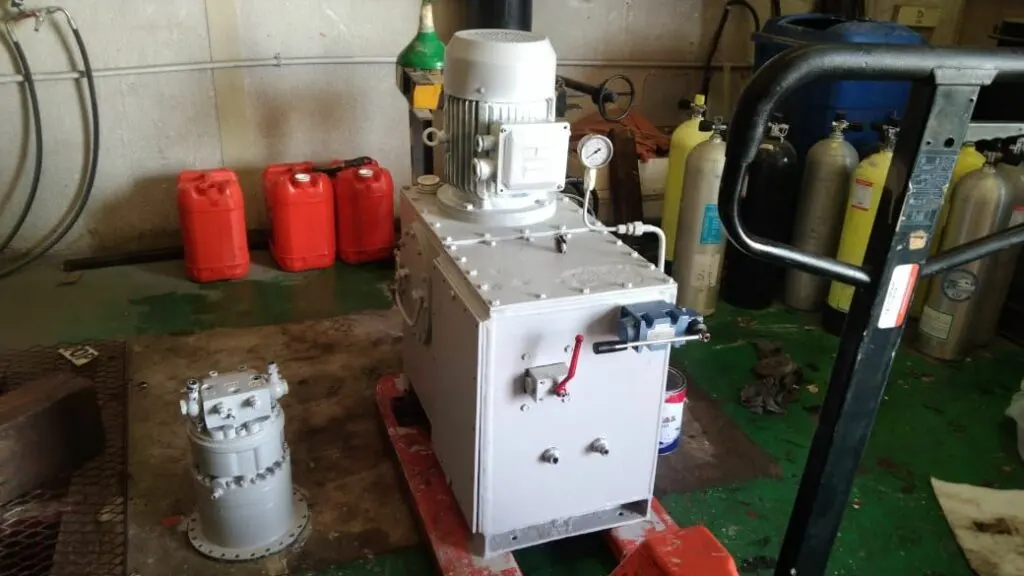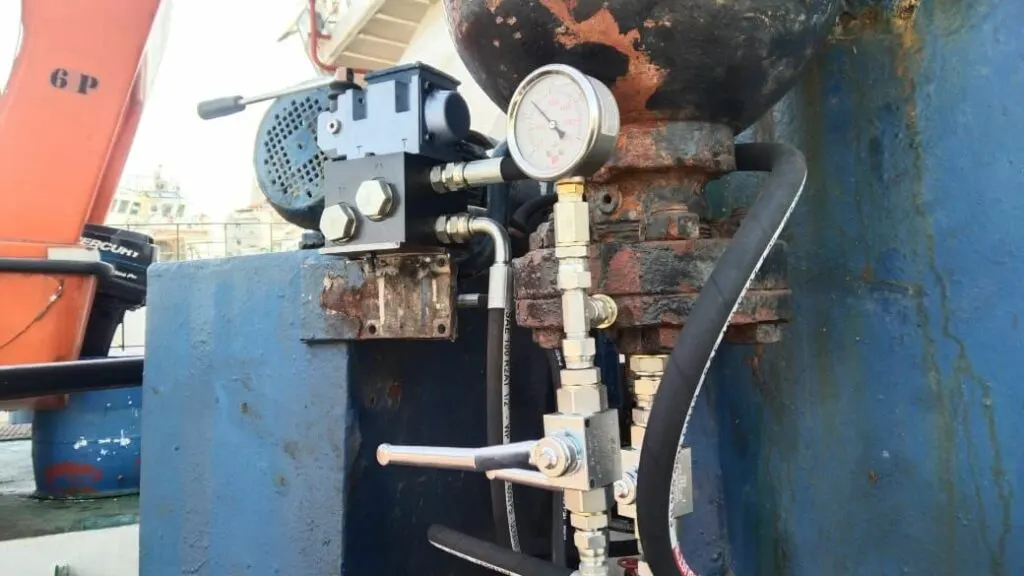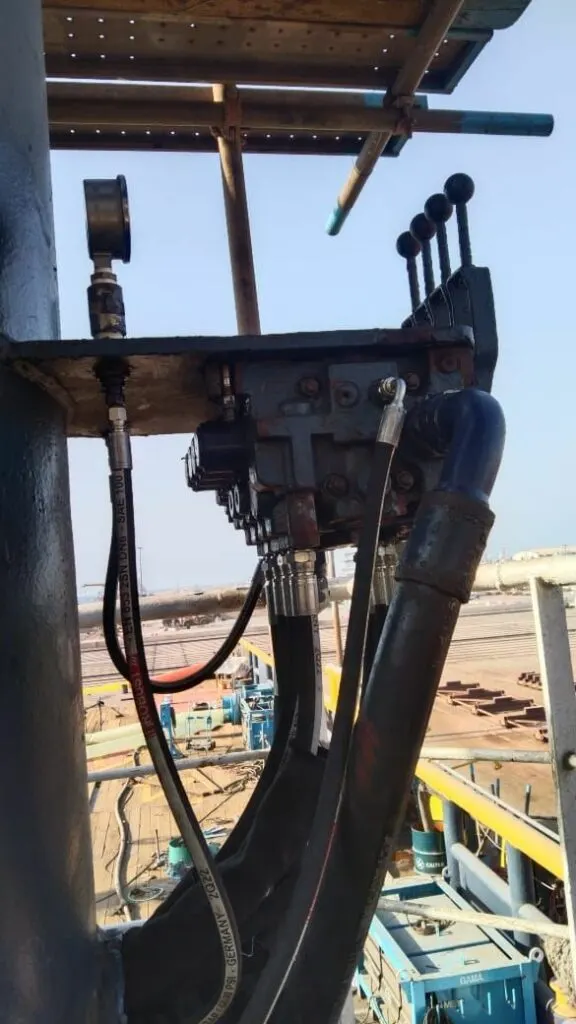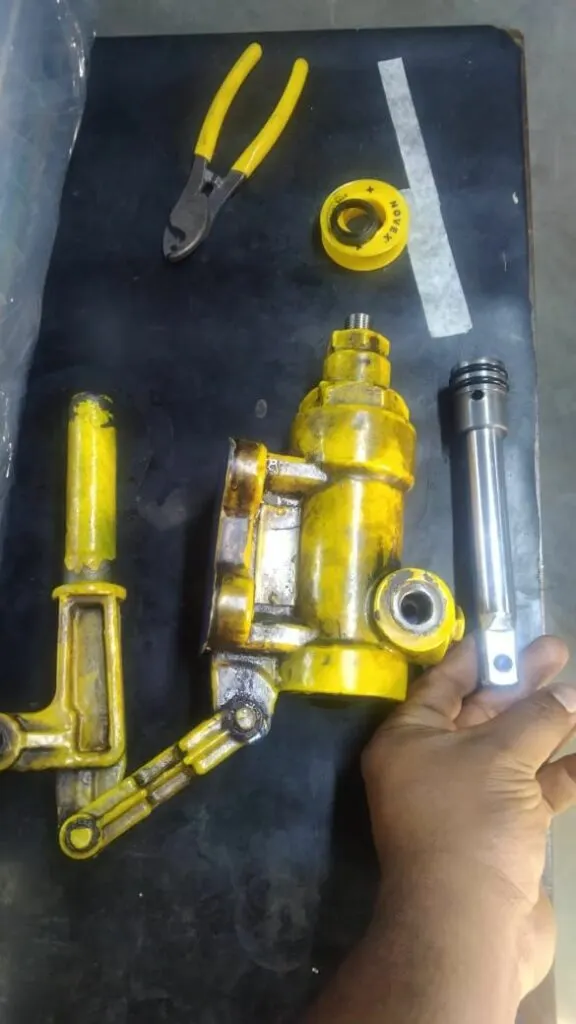
We repair hydraulic pumps and motors for ships, offshore vessels, cranes, ports and factories across the UAE: axial piston, vane and gear pumps, radial-piston and orbital motors, and slewing and winch motors. Units are stripped in our Sharjah workshop, every wear part is measured and photographed, and the rebuilt unit is tested before it goes back.
A pump rarely fails without warning. It gets noisy, runs hot, loses speed under load or starts passing oil through the case drain. We try to catch it at that stage, when a rotating group or bearing set is enough, rather than after the pistons have welded themselves to the swash plate.
What we work on
- Axial piston pumps and motors, fixed and variable displacement, open and closed loop, with pressure, flow and load-sensing controls
- Vane pumps, single and double, fixed and variable
- Gear pumps and motors, external gear, often in tandem on mobile plant
- Radial-piston motors, high torque and low speed, as fitted to winches, windlasses and capstans
- Orbital (gerotor) motors on conveyors, small winches and auxiliary drives
- Slewing and swing motors with their brakes and gearboxes on cranes and excavators
Makes we see regularly include Bosch Rexroth, Parker and Denison, Danfoss (Sauer-Danfoss), Kawasaki, Hydac, Staffa, Brevini, Atos, Liebherr and Komatsu. We are not an authorised service partner for any of them. We work from the makers’ published data and genuine or equivalent parts, and we tell you which is which.
How the job runs
- Data and photos. Nameplate, model code, where it is fitted, what it is doing wrong, and how long it has run.
- Quote. A quote for strip-down and inspection, plus the likely scope of the rebuild, usually within one working day.
- Removal or delivery. We remove the unit on board or on site, or you send it to the workshop.
- Strip-down and inspection report. Every part is cleaned, measured and photographed. You get a firm scope and quote before parts are ordered.
- Rebuild. Seals, bearings, shaft seals and wear parts, or a full rotating group exchange when the block, pistons and valve plate are past recovery.
- Test and adjust. Leak and function test, and pressure and flow control settings checked against the original settings or your system requirements.
- Report and refit. Measurements, photos and settings in writing, and installation with a commissioning check if you want it.
What we measure and check
For axial piston units: piston-to-bore clearance in the cylinder block, slipper wear and slipper-to-piston end play, flatness and scoring of the valve plate and the face of the block, swash plate or cam surface condition, retainer and spherical guide wear, and bearing condition.
For vane pumps: vane tip wear, vane-to-slot clearance, cam ring track, and side plate scoring.
For gear units: gear tip and side wear, bushing or bearing wear, and the housing track where the gears have been cutting into the body. That track is a good indicator of how hard the pump has been driven.
For radial-piston motors: piston and bore condition, cam ring track, distributor valve wear and shaft bearings.
On installed pumps we also measure case drain flow. Rising case drain flow at a steady pressure and temperature is one of the most reliable signs of internal wear, and it can be trended from one visit to the next. We record system pressure, oil temperature and the relief and compensator settings at the same time.
Common failures in UAE conditions
- Heat. With ambient air at 45 to 50 C, an undersized or fouled cooler lets oil run hot. Viscosity drops, the lubricating film under the slippers thins, and wear speeds up. See hydraulic overheating in UAE heat.
- Contamination. Sand and dust through tired breathers, and water from condensation in humid coastal air. Abrasive particles score valve plates and gear housings. We advise an oil sample against an ISO 4406 cleanliness target before a rebuilt pump goes back into dirty oil.
- Cavitation. A blocked suction strainer, a collapsed suction hose or the wrong oil grade causes a gravel-like noise and pitting on the valve plate. See our guide to the noisy hydraulic pump.
- Shaft seal and bearing failure from misalignment, worn couplings or high case pressure when the drain line is restricted.
- Control faults, such as a compensator or load-sensing spool that sticks and makes a variable pump hunt or fail to come on stroke.
What drives the cost
The biggest factor in the cost of a pump or motor repair is whether the rotating group can be reconditioned or must be replaced. A seal and bearing job on a gear pump sits at the bottom. A large variable piston pump with a new rotating group, or a radial-piston winch motor with a worn cam ring, sits at the top.
Other factors are parts availability and lead time for the model, whether the controls need setting on a test stand, and removal access on board. If a new or exchange unit is cheaper and quicker than a rebuild, we say so in the inspection report. The pump power calculator helps check drive power against flow and pressure when a replacement is being considered.
What to send for a fast quote
- Photos of the unit and a legible photo of the nameplate and model code
- Where it is fitted: crane, winch, steering gear, power pack, plant
- Working pressure, drive speed and motor power if known
- The symptoms: noise, heat, slow, no pressure, leaking, or planned overhaul
- Emirate, vessel or site location, and your deadline
Related services
A failed pump usually leaves debris in the system. We look at the power unit, filters and coolers as part of the same job where you want us to. Crane and deck machinery pumps often come in alongside a crane hydraulics or winch and windlass overhaul.