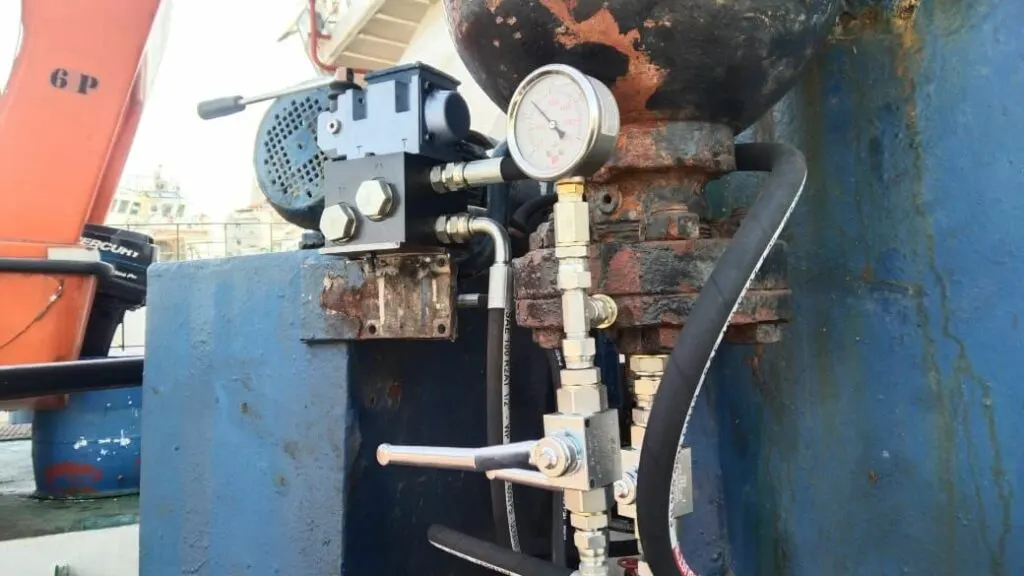
We attend vessels at the Fujairah and Khor Fakkan anchorages by launch boat for hydraulic troubleshooting, repairs, davit tests and hose work, and we work in both ports and on the Fujairah bunkering fleet. Anchorage work is about planning: the right engineer, the right parts and the right test gear on one launch, timed with the ship’s other calls.
Why the east coast is different
Fujairah is one of the world’s largest bunkering hubs, and its anchorage is busy with tankers, bulk carriers and container ships calling for bunkers, stores, crew changes and repairs without entering port. Khor Fakkan, a short way up the coast, has a container terminal and its own anchorage. Both sit outside the Strait of Hormuz, which makes them convenient for ships trading in and out of the Gulf.
That means our east coast work is mostly on visiting ships at anchor, with limited time and no quay crane or workshop alongside. It also means steady work on the local bunkering fleet: bunker tankers and barges with cargo and hose-handling cranes, valve remote control and deck machinery that run every day.
Typical anchorage jobs
- Steering gear troubleshooting and seal renewal after a crew report or before a PSC inspection. See steering gear service.
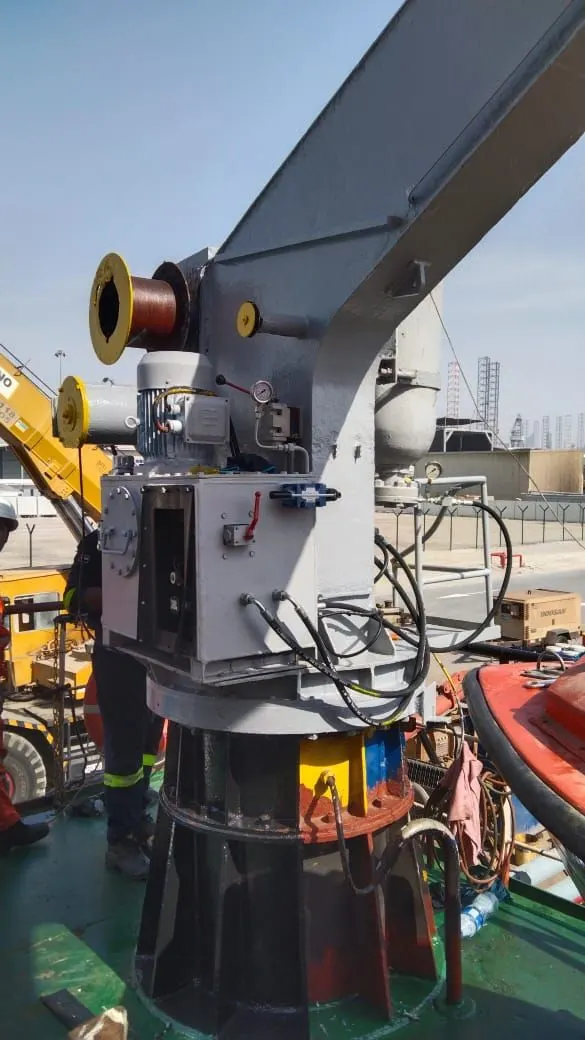
- Provision and hose-handling crane repairs, especially on tankers before bunkering or cargo operations. See provision and hose-handling cranes.
- Lifeboat and rescue boat davit tests: annual thorough examination, winch brake test and the SOLAS 5-yearly dynamic test with water bags. See davit load testing.
- Accommodation ladder winch repairs and load tests. See accommodation ladders and gangways.
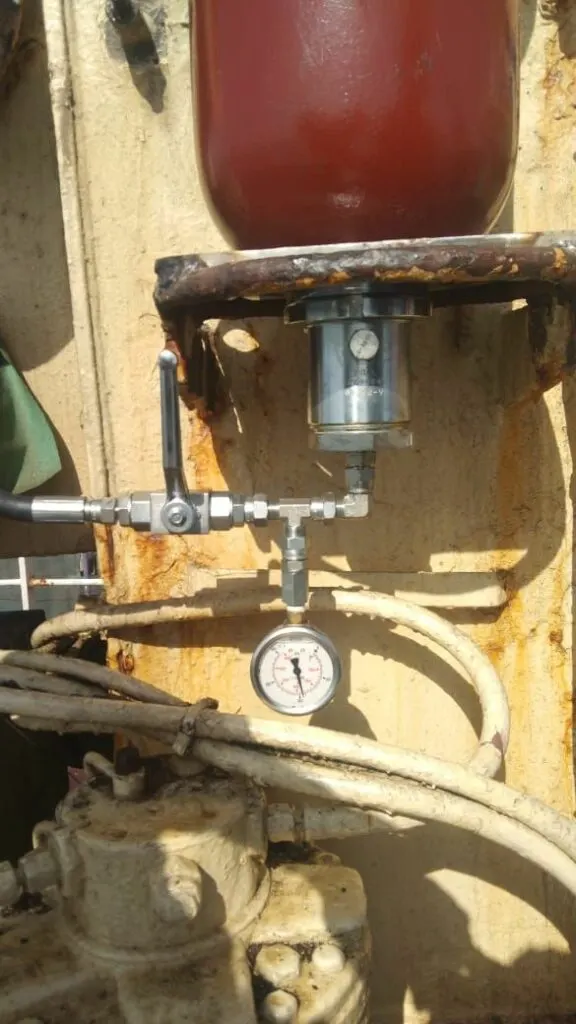
- Accumulator pre-charge checks and bladder replacement on deck machinery.
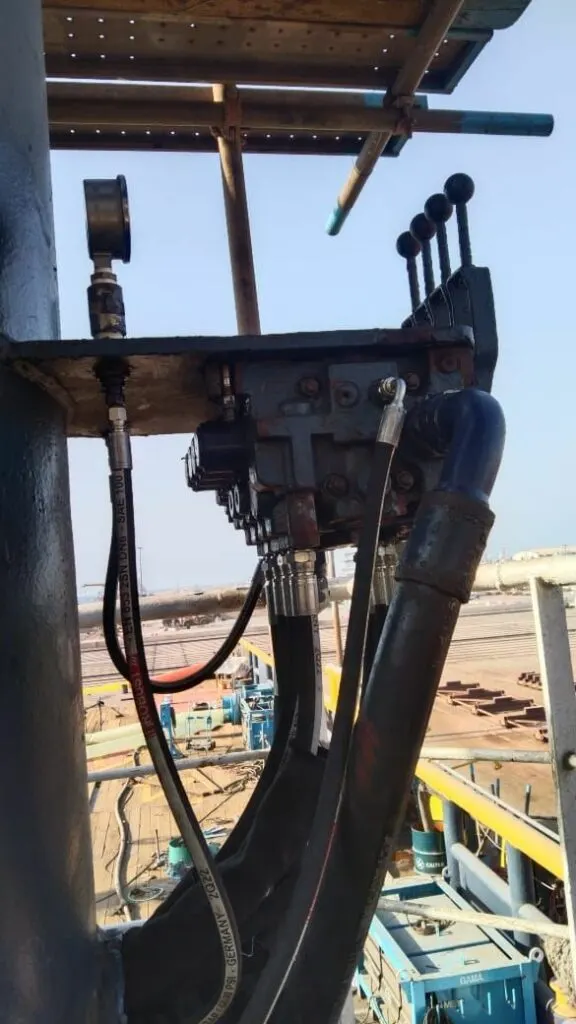
- Hose replacement on a crane or deck system from a survey done on an earlier call or from photographs, made up in our Sharjah workshop and brought out on the launch.
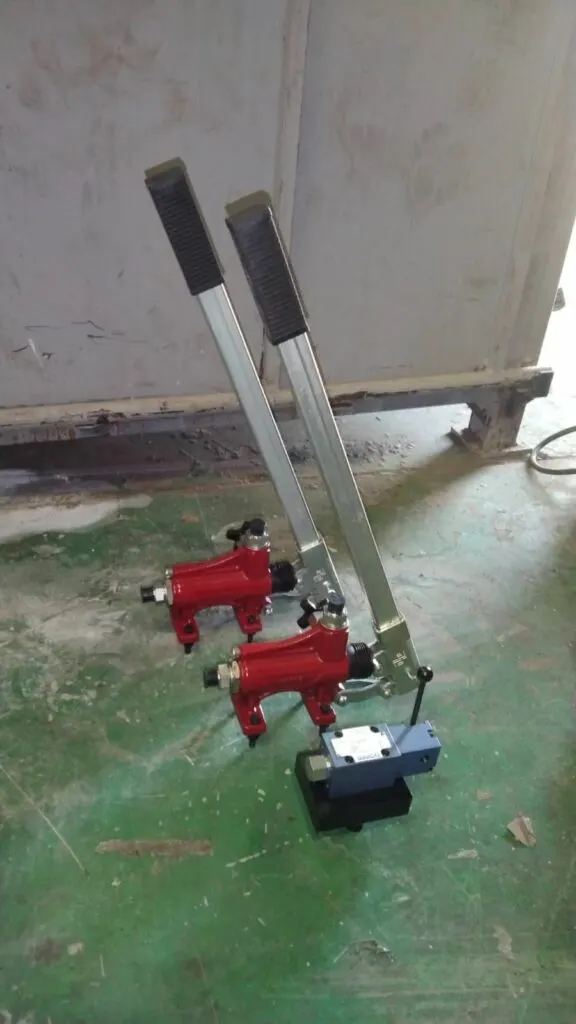
- VRCS troubleshooting on tankers.
How anchorage work is organised
1. Scope before the launch. The more we know before we go, the more we can do in one trip. We ask for the defect description, photographs, nameplates and the vessel’s own spares list. See what to send for a hydraulic quote.
2. The agent books the launch. The ship’s agent arranges the launch boat, boarding permission and any port clearance. We give the agent our team’s names, IDs and the list of equipment and test gear we bring aboard.
3. Everything goes out in one trip. Tools, gauges, seals, hoses, accumulator charging kit and, for load tests, water bags and calibrated load cells. Water bags are filled on board from the ship’s fire or general service line, so we confirm availability with the chief engineer.
4. Work on board, bench work ashore. Troubleshooting, seal renewals, hose work and tests are done on board. Components that need the bench, such as a large cylinder or a pump, come ashore to our Sharjah workshop and go back out on a later launch if the ship stays, or to the next port if it sails.
5. Report before the ship sails. Test reports and job reports go to the master and the office, with photographs. Our tests are regularly witnessed by class surveyors from DNV, Bureau Veritas, Lloyd’s Register and ABS when a surveyor is booked.
Launch timings depend on the agent, weather and sea state. Same day or next day attendance is typical for planned work once the agent confirms the launch. Swell can stop launch transfers and outdoor lifting, so we always agree a fallback.
Port work in Fujairah and Khor Fakkan
Alongside, the work is more like any other port: vessels at the Port of Fujairah and Khor Fakkan berths with crane, hatch cover or steering defects, and the oil terminals and storage facilities around Fujairah with their pumps, valves and power packs. Port access is arranged through the agent or terminal.
The bunkering fleet
Bunker tankers and barges based in Fujairah run their cargo pumps, hose-handling cranes, VRCS and deck machinery daily. Faults lose deliveries. We support local operators with planned maintenance, crane overhauls, hose programmes and load tests, scheduled between deliveries. See hose management and valves and VRCS.
What to send for anchorage work
- Vessel name, IMO number, ETA and expected stay at anchor.
- Agent’s name.
- The defect, with photographs and nameplates.
- For davit or crane tests: SWL, last test date, and whether a class surveyor will attend.
- What spares and fresh water are on board.
We usually quote within one working day of photos and nameplate data. Anchorage jobs carry launch and attendance costs, so we focus on planned repairs, overhauls and load tests rather than single-hose call-outs; one-hose jobs at anchor are rarely economical for anyone.