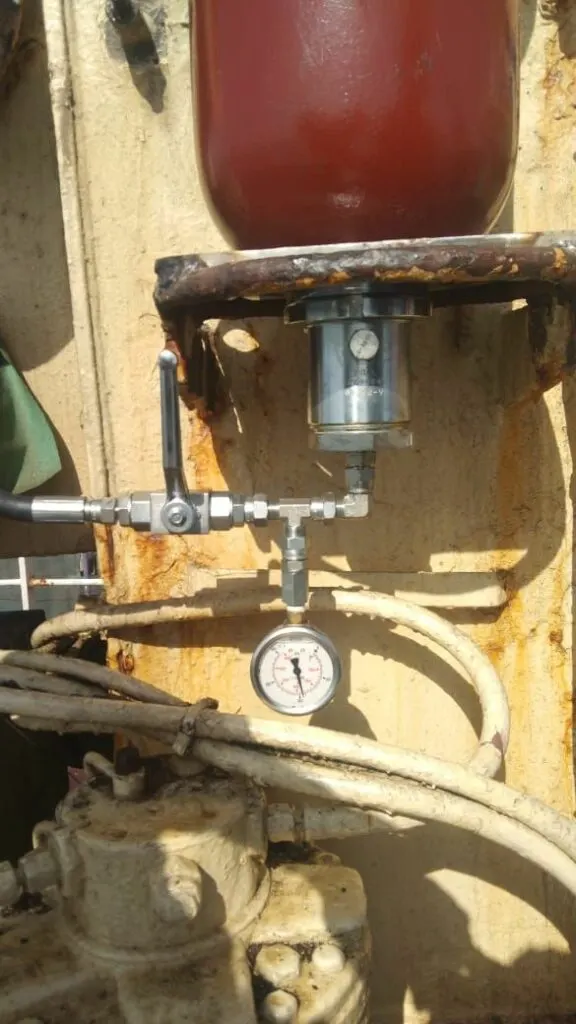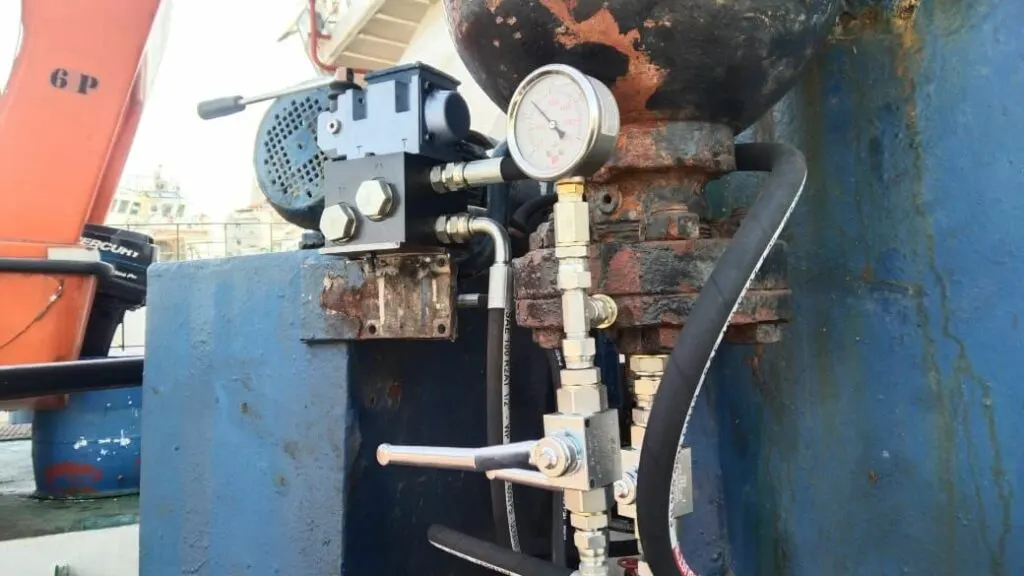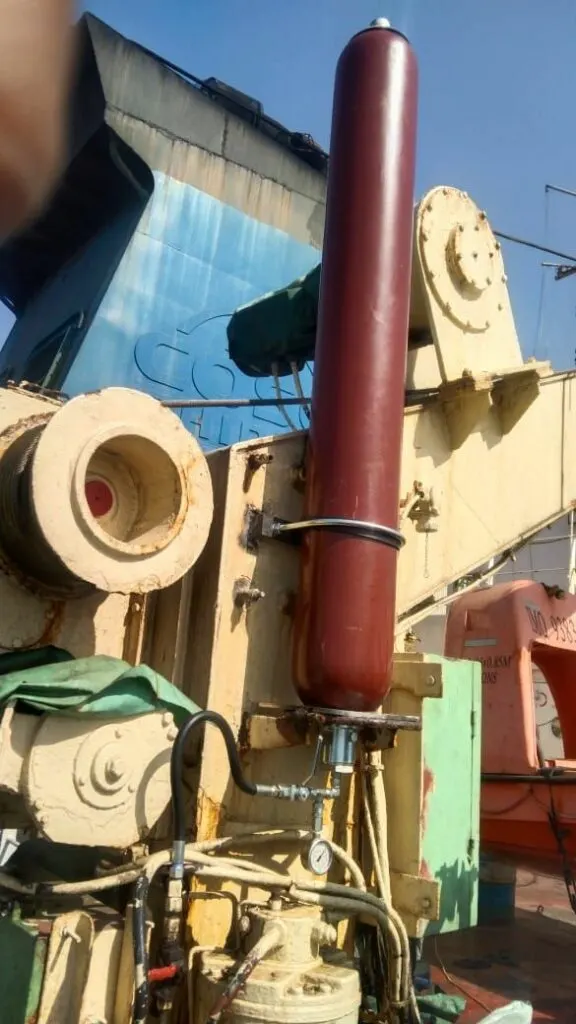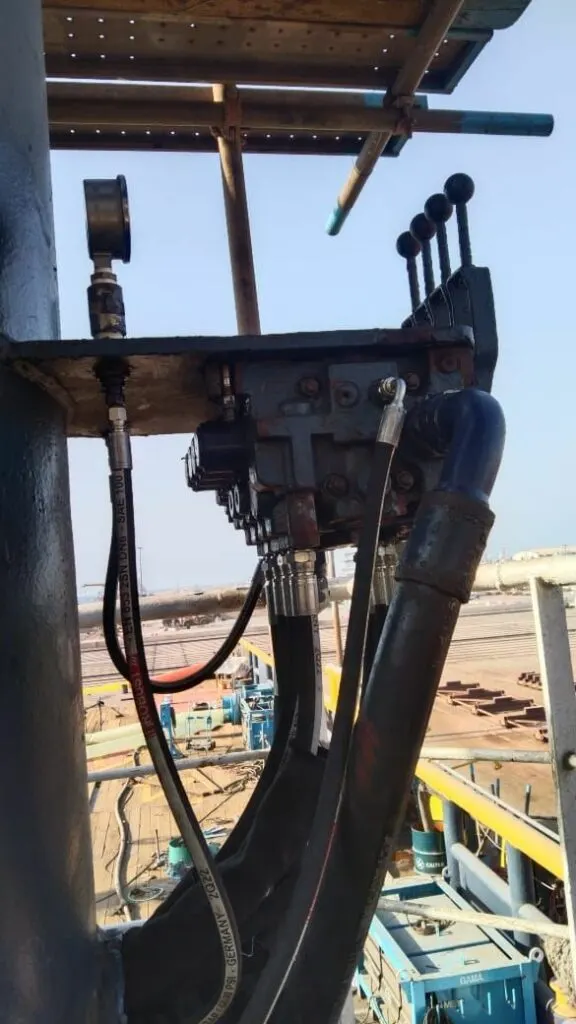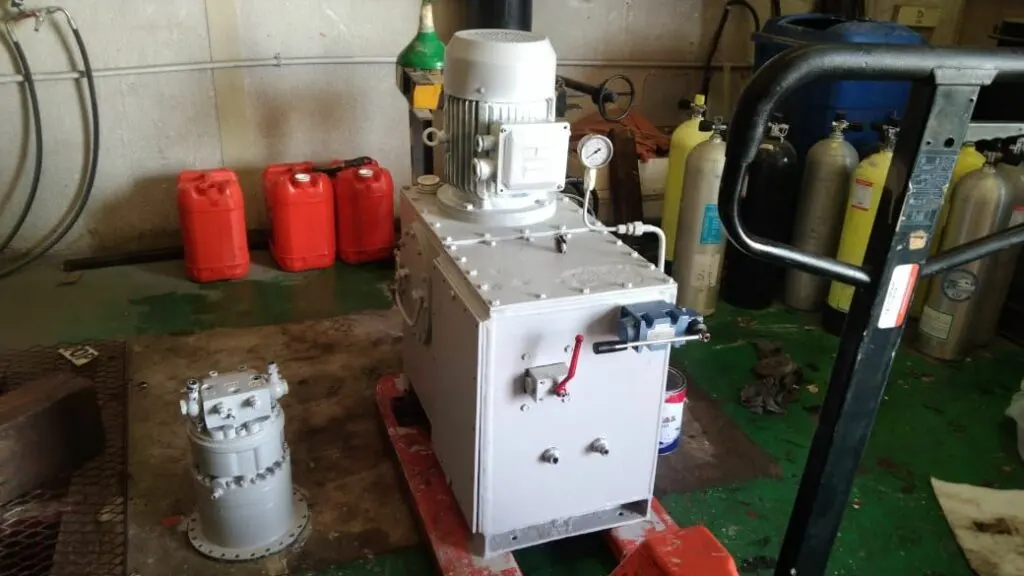
We overhaul and refurbish hydraulic power units (HPUs) across the UAE, check and recharge accumulators, renew bladders, and build new power packs to a specification. The work covers deck machinery and crane power units, steering and VRCS packs, offshore and drilling-support HPUs and factory power packs, in our Sharjah workshop or on site in any emirate.
The power unit is the part of the system everyone forgets until it fails. It is also where the problems of the whole circuit show up first: heat, dirty oil, noisy pumps and accumulators that have quietly lost their charge.
What we work on
- Electro-hydraulic power packs for cranes, winches, hatch covers, ramps and steering gear
- VRCS and remote valve control power packs on tankers
- Offshore HPUs on deck equipment, A-frames and tool skids
- Industrial power packs on presses, test rigs and process machinery
- Bladder, piston and diaphragm accumulators and their safety blocks
- Reservoirs, filters, breathers, air-blast and water-cooled oil coolers, heaters, level and temperature switches
How the job runs
- Survey or photos. Photos of the unit, nameplates of the motor, pump and accumulators, the circuit diagram if available, and the problem.
- Quote. An outline quote typically within one working day, or a quoted survey for a large or unclear scope.
- Condition check on site. Pressure, flow and temperature readings, relief settings, accumulator pre-charge, filter condition, cooler performance, noise and vibration, and an oil sample.
- Inspection report and scope. Findings with photos and readings, and a firm scope for overhaul or refurbishment.
- Overhaul. In place or in the workshop: pump and motor, valves, filters, coolers, seals, accumulators, instrumentation, tank cleaning and repainting.
- Test. Run-up, pressure and relief settings, function of every circuit, and temperature stability under load.
- Report. Settings, readings, pre-charge values and photos in writing.
Accumulators: pre-charge and bladders
Accumulators store energy at high pressure, so they get careful handling.
- Pre-charge check. We check the gas pre-charge with the accumulator isolated and the oil side fully discharged, using a charging and gauging kit. Pre-charge is always dry nitrogen, never air or oxygen.
- Pre-charge value. It is set from the system’s minimum and maximum working pressures and the duty. For a typical bladder accumulator used for energy storage it sits a little below the minimum working pressure. We follow the maker’s figure where one is given, and correct for temperature, because in the UAE a pre-charge set at noon on deck will read differently at night.
- Bladder renewal. A bladder that will not hold pre-charge, or oil found on the gas side, means a failed bladder. We renew bladders and gas valves and check the poppet valve and shell.
- Safety blocks. Isolation, bleed and safety relief valves on the accumulator block are checked and their settings recorded.
Our accumulator calculator helps size usable volume against pre-charge and working pressures, and the guide on accumulator safety and pre-charge explains why a flat accumulator causes so many odd faults.
Heat, oil and filtration
UAE ambient temperatures of 45 to 50 C, often with the unit in a hot machinery space or on an exposed deck, push oil temperature up. Every 10 C or so above the design point shortens oil and seal life noticeably. On an overhaul we look at:
- Cooler capacity and condition. Air-blast coolers clog with sand and dust; water-cooled ones scale or foul on the seawater side.
- Oil grade. Many units run ISO VG 46 by default where the maker allows heavier oil for hot service. Our viscosity tool shows how viscosity falls with temperature.
- Filtration and breathers. Desiccant breathers, return and pressure filters, and bypass indicators. A filter left in bypass is no filter at all.
- Oil condition. A sample against an ISO 4406 target, and water content in humid locations.
We do not offer hot oil flushing to NAS or ISO classes as a service. We will tell you where oil replacement and filter changes are enough and where a specialist flush is needed.
New-build power packs
We build new power packs to a specification: duty, flow, pressure, number of circuits, control voltage, environment and space. We select the pump, motor, valves, accumulators, cooling and filtration, and assemble and test the unit with a test record. Typical uses are replacing an obsolete pack on a vessel or adding a pack for a new deck machine or factory line.
What drives the cost
HPU work varies widely in scope. A service with accumulator checks, filters and settings sits at the bottom. A full refurbishment with pump and motor overhaul, new cooler and tank work sits higher, and a new-build pack is quoted on its specification. Access, especially on board, and parts lead times are the other big factors.
What to send for a fast quote
- Photos of the whole unit and every nameplate: electric motor, pump, accumulators
- The circuit diagram, if available
- What it drives, working pressure and flow
- Symptoms: overheating, noise, pressure loss, slow functions, leaks
- Emirate, vessel or site location, and your deadline
Related services
A worn pump is the most common HPU fault, covered under pump and motor repair. Valve and VRCS faults are covered under valves and VRCS.