We repair and load test accommodation ladders, gangways and their winches, and the pilot ladder winches and passenger gangways found on ships and at terminals. Most jobs combine winch or hydraulic repair, wire renewal and a load test with a report, done during a port call, at anchorage or in drydock in the UAE.
The equipment
Accommodation ladders hang over the ship’s side and are raised, lowered and stowed by a winch, usually through a davit or a lifting frame. The winch may be electric, pneumatic or hydraulic. On many ships the ladder also slews or turns out using hydraulic cylinders.
Gangways run from ship to shore or between units. Shipboard gangways may be lifted by a crane or a dedicated davit; terminal and offshore gangways are often hydraulic, with telescopic, luffing and slewing functions.
Passenger gangways and boarding bridges at cruise and ferry terminals are larger hydraulic structures with power packs, cylinders and level control.
Pilot ladder winches raise and lower combination or long pilot ladders on high-sided ships.
What fails
- Winch brakes that slip or do not hold, from worn linings, contaminated brake surfaces or incorrect adjustment.
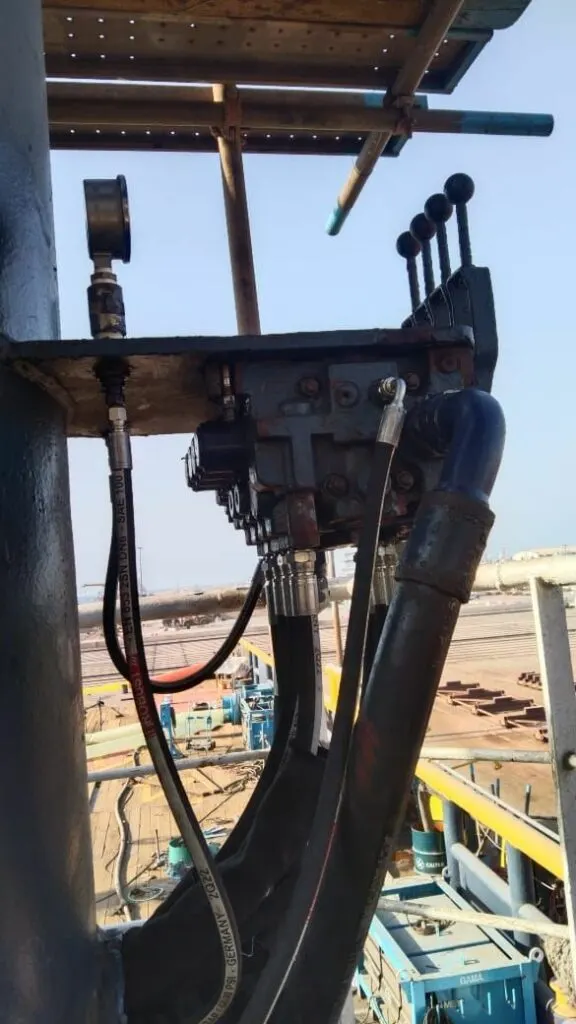
- Hydraulic motor and valve faults on hydraulic winches: slow hoisting, creeping, leaks.
- Cylinder leaks on slewing and turn-out cylinders exposed to sun and spray.
- Wire rope wear and corrosion, often the main reason a ladder fails inspection.
- Sheaves and pins seized or worn.
- Limit switches and stops not working, allowing the ladder to overrun.
- Power pack problems on terminal gangways that stand idle between ship calls and then fail on demand.
The rules, briefly
SOLAS requires accommodation ladders and gangways, and their winches and fittings, to be maintained, inspected and examined at regular intervals, following the IMO guidelines that go with the regulation. In practice, flag administrations and class expect regular inspection by the crew, periodic thorough examination by a competent person, and load testing at the intervals and loads set by the guidelines, the flag and the maker, as well as after repairs. Pilot ladder winches are covered by the SOLAS rules on pilot transfer arrangements.
Because the details vary by ship, flag and build date, we check your ship’s requirement before the test and set the load and method to match. Our tests are regularly witnessed by class surveyors from DNV, Bureau Veritas, Lloyd’s Register and ABS.
For terminal and passenger gangways onshore, the port or terminal’s own procedures and insurer requirements usually set the inspection and test regime.
What we do
Inspection. Winch, brake, wire, sheaves, pins, davit or frame, limit switches and the ladder’s suspension points.
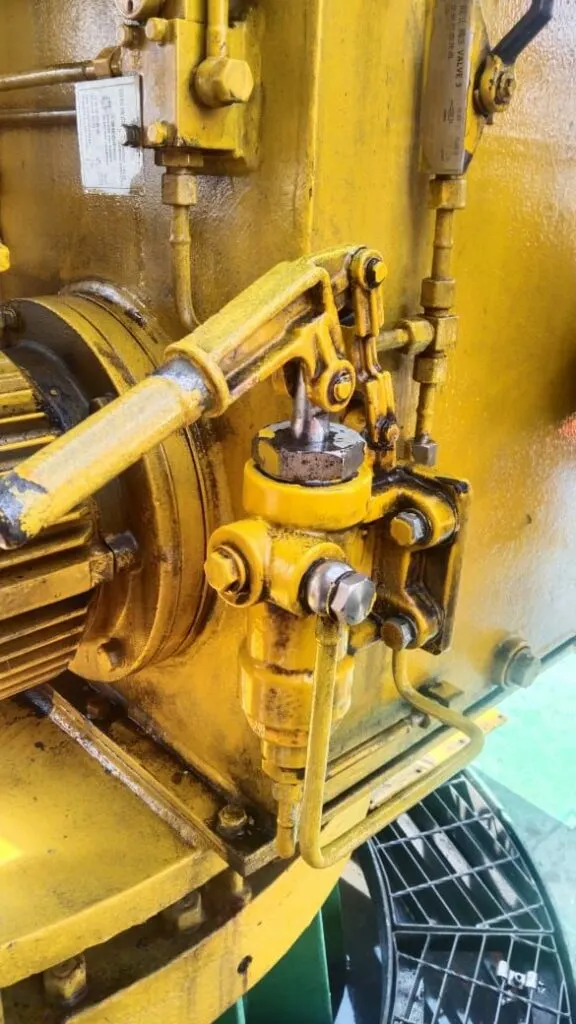
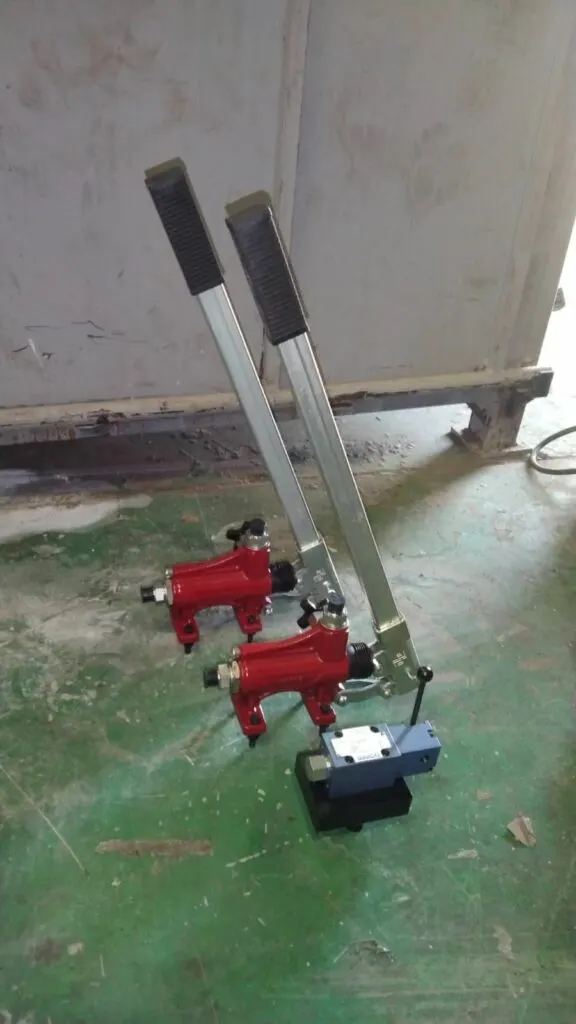
Winch repair. Brake overhaul and adjustment, hydraulic motor and valve repair, gearbox inspection. Hydraulic components that need the bench go to our Sharjah workshop. See deck machinery and winches.
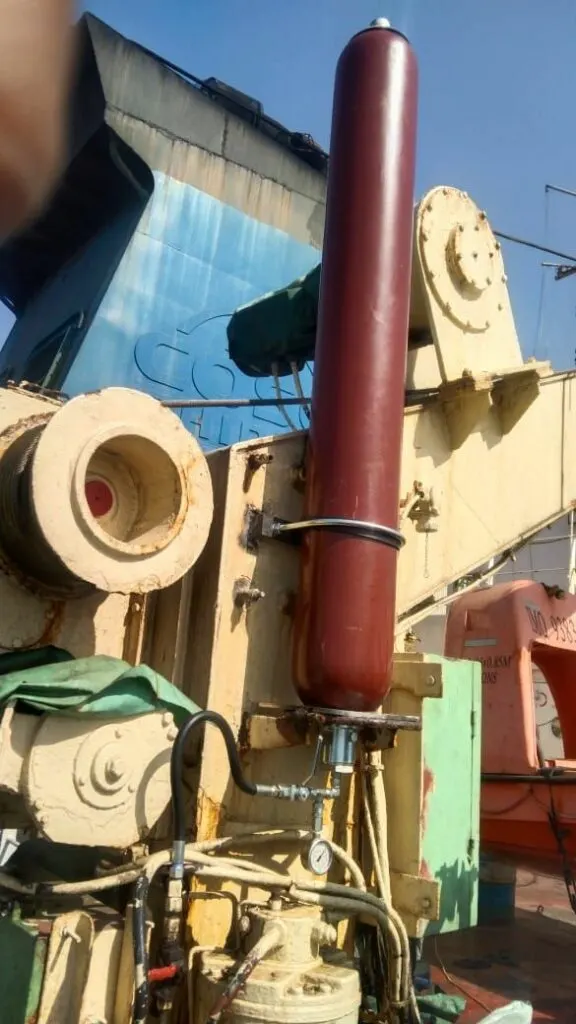
Cylinder repair for slewing and turn-out cylinders and gangway cylinders, bench tested at 1.5 times working pressure. See hydraulic cylinder repair.
Wire rope renewal with certificates.
Load testing with water bags and calibrated load cells, including the winch brake test, with a report listing the loads, durations and results, and photographs. See load testing.
Terminal gangways. Power pack refurbishment, cylinder overhaul and load tests for port and terminal gangways. See hydraulic power units and ports and terminals.
How we organise the work
At a berth, the agent arranges gate passes and we attend with the test gear and spares. At the Fujairah and Khor Fakkan anchorages, the ladder is often the means of boarding, so we agree the sequence with the master: we board, test or repair, and leave the ladder in service. Water bags are filled from the ship’s water supply. In drydock, ladders and gangways are tested near the end of the docking, after any repairs.
What to send for a quote
- Vessel name, port or anchorage and ETA.
- Ladder or gangway maker, length and SWL or rated persons, and the winch type.
- Photographs of the winch nameplate, the wire and the davit or frame.
- The last test certificate and date.
- Any defects noted by the crew, class or PSC.
We usually quote within one working day of receiving photos and nameplate data. Testing several ladders, gangways or davits in one visit saves attendance time, so it helps to tell us everything that is due.