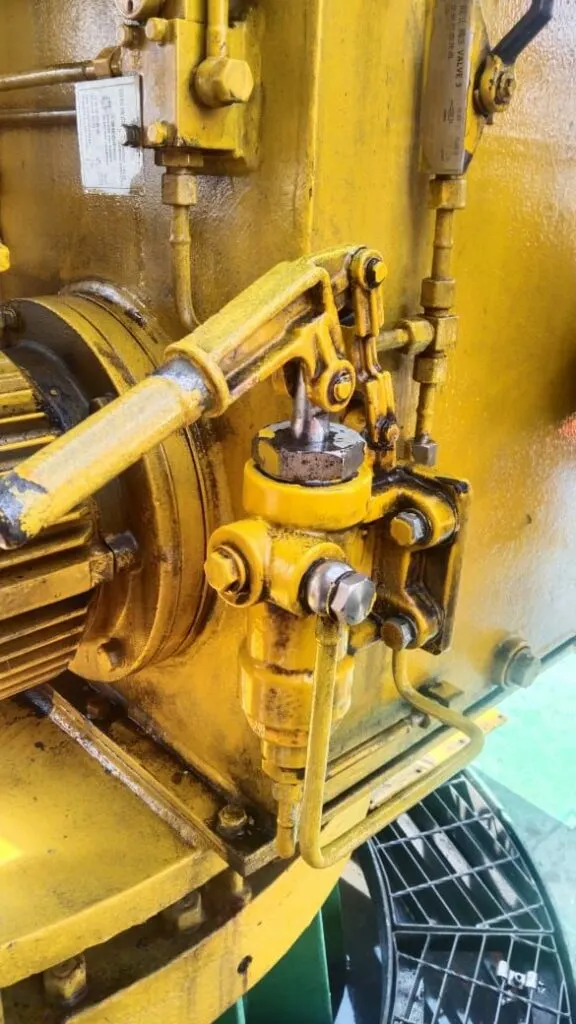
We repair the hydraulics that open, close and secure hatch covers, ro-ro ramps and shell doors: the cylinders, motors, cleating systems, valves, hoses and power packs. Most jobs are on bulk carriers, general cargo ships and ro-ro vessels calling at UAE ports, or during drydock in Dubai and Abu Dhabi.
Types of covers and ramps, and their hydraulics
Folding hatch covers (common on general cargo, multipurpose and many bulk ships) are opened by hydraulic cylinders at the hinges, either external cylinders on the coaming or cylinders built into the panel hinges. Folding pairs are linked so they fold together.
Side-rolling covers (common on bulk carriers) are lifted on hydraulic jacks, then rolled sideways by hydraulic motors driving chain or rack-and-pinion drives.
Lift-away and piggyback covers use hydraulic jacks to lift panels and motors or cylinders to move them.
Cleating may be manual, or hydraulic with cleat cylinders that pull the panels down onto the seals.
Ro-ro ramps, bow and stern doors, and shell doors use large cylinders to raise and lower, and smaller locking cylinders or pins to secure them at sea, with indicators on the bridge.
Most systems are fed from a central hydraulic power pack in a dedicated room or on deck, with long pipe and hose runs to each hatch.
Typical faults
- Cylinder leaks and drift. Hinge cylinders sit in sun, salt and cargo dust and the rod seals harden. A panel that will not hold its position is a hazard to crew.
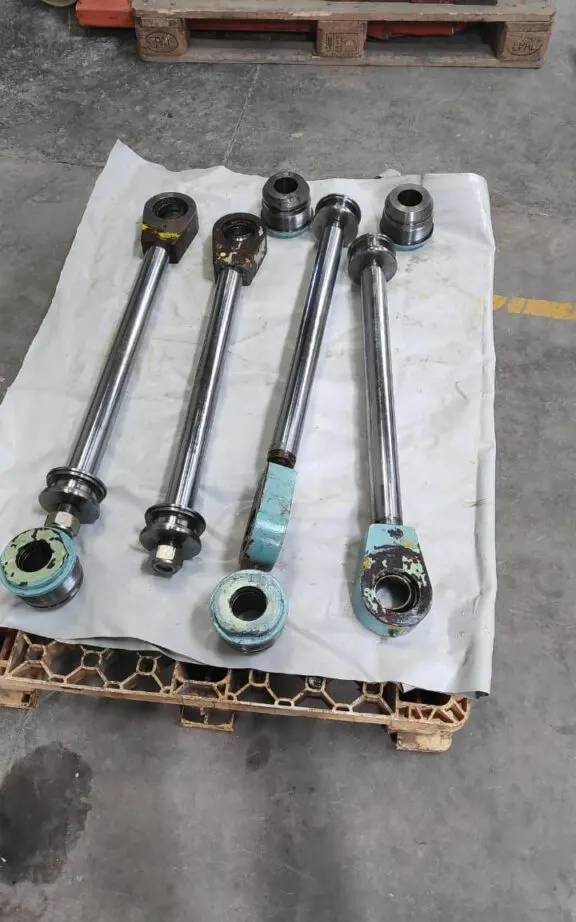
- Pitted rods, which cut new seals quickly. These need re-chroming by our machining partners or new rods.
- Hose failures. Hoses near the coaming are exposed to sun, abrasion and cargo. A burst hose can spray oil into a hold, and on grain and other sensitive cargoes, oil contamination becomes a cargo claim.
- Jack and motor failures on rolling covers: slow lifting, uneven rolling, leaking motors.
- Locking and cleating faults: cylinders not reaching position, sensors misreading, panels not secured.
- Power pack problems: worn pumps, overheating in summer, contaminated oil after years of open-deck hose changes.
- Synchronisation problems on paired cylinders, often a sign of internal leakage in one cylinder or a faulty flow divider.
Watertightness of covers depends mainly on seals, compression bars and cleats, which are surveyed by class. Hydraulic faults that stop the cover seating or cleating properly contribute to those findings.
Class and inspection pressure
Hatch covers are examined at class annual surveys, and their condition is a frequent subject of port state control and charterer inspections. Ro-ro doors and ramps have their own class and SOLAS requirements for securing and indicators. A cover that cannot be operated safely, or an oil leak on deck, will be noted. Our reports record what was found, what was done and the test results, which helps close the item with the surveyor. Our work is regularly witnessed by class surveyors from DNV, Bureau Veritas, Lloyd’s Register and ABS.
What we do
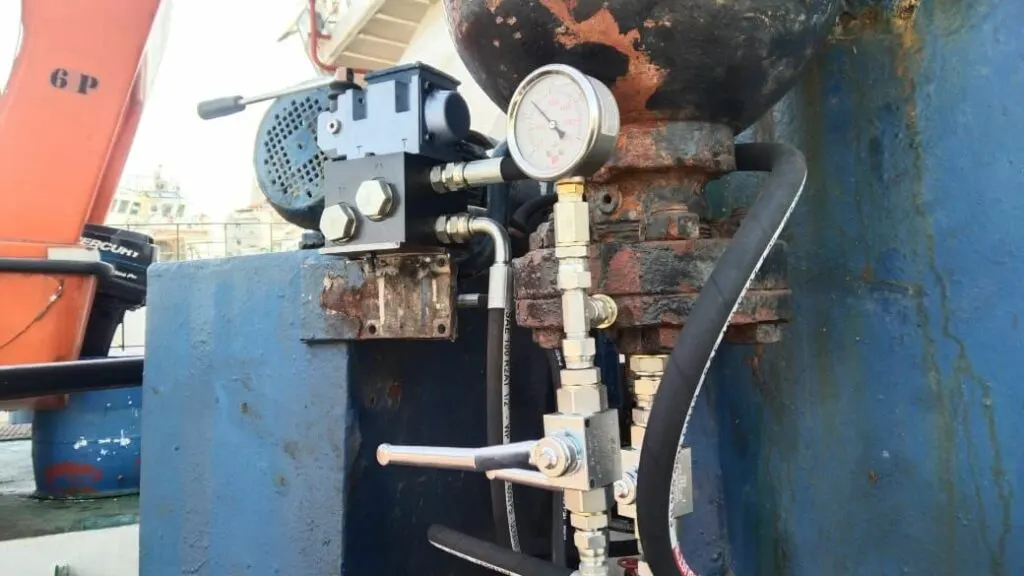
Troubleshooting. With gauges at the power pack and the cylinders, we find out whether the problem is the pump, a valve, a cylinder or a hose before anything is removed.
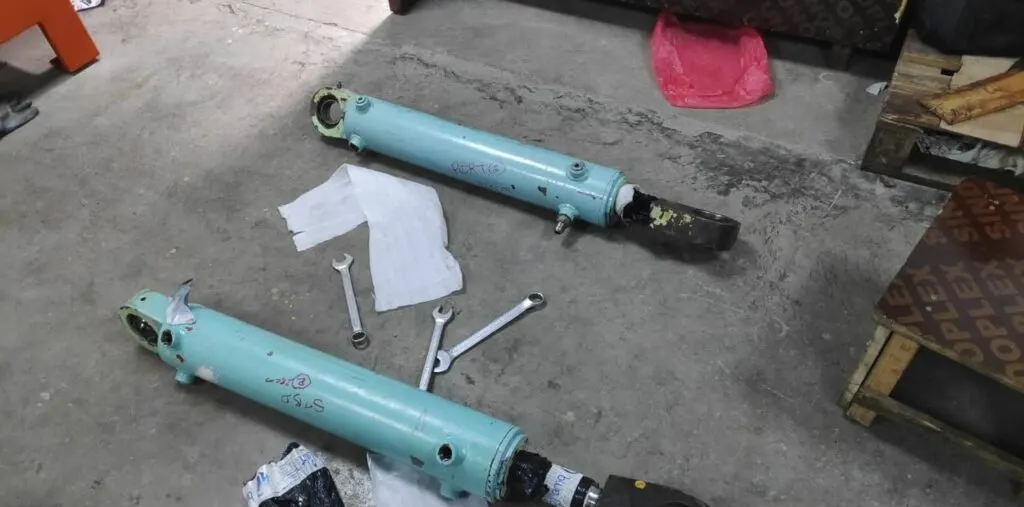
Cylinder overhaul. Hinge, jack and ramp cylinders are removed, taken to our Sharjah workshop, stripped, measured and resealed or repaired, and pressure tested at 1.5 times working pressure with a report. A reseal typically takes 3 to 7 working days after strip-down, longer if the rod needs re-chroming. For a short port call, we may plan to remove and overhaul cylinders in sets across two calls. See hydraulic cylinder repair.
Motors and jacks. Rolling cover motors and jacks are overhauled on the bench. See pumps and motors.
Power pack overhaul. Pump overhaul, valve service, accumulator checks, cooler cleaning and oil replacement. See hydraulic power units.
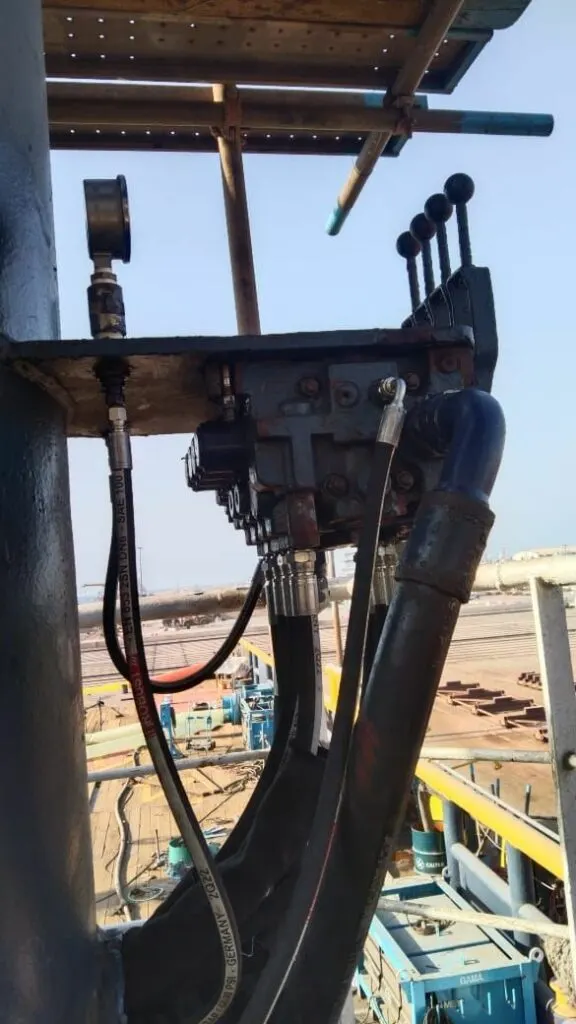
Re-hosing. A hatch cover system has dozens of hoses. We survey and tag them, make them up in our workshop, usually within one or two days, and fit them as a planned job. See hose management.
Drydock packages. Full hatch cover hydraulic overhaul as part of a docking specification. See shipyards and drydocks.
What to send for a quote
- Vessel name, type and port or anchorage, and ETA.
- Hatch cover maker and type, and the number of hatches.
- The fault: which hatch, which movement, any leaks.
- Photographs of the cylinder nameplates or dimensions (bore, rod, stroke), and of rod condition.
- Photographs of the power pack and its nameplate.
- How long the ship stays and whether the holds are loaded.
We usually quote within one working day of receiving photos and nameplate data. We focus on overhauls, cylinder campaigns and planned work rather than single-hose call-outs.