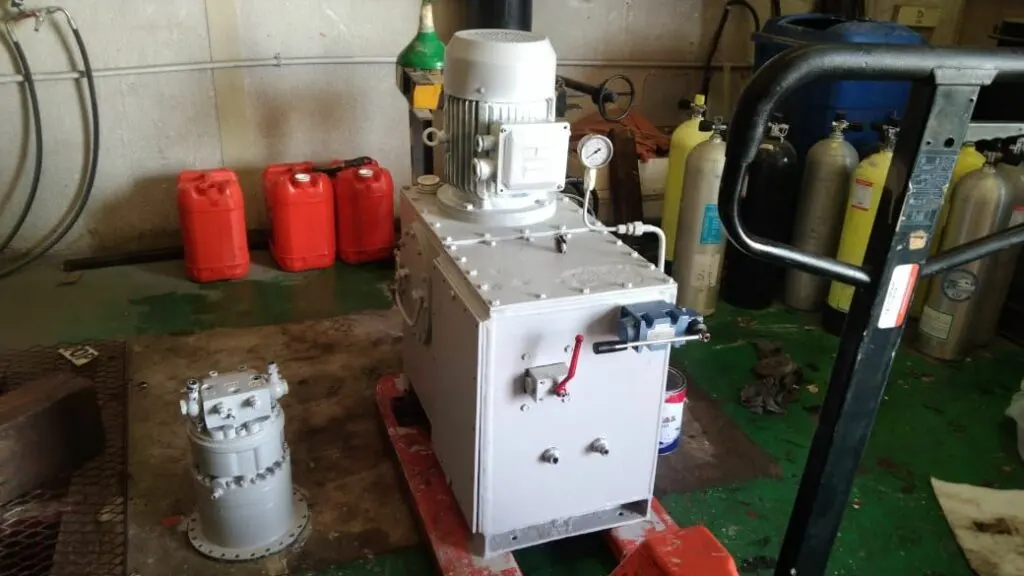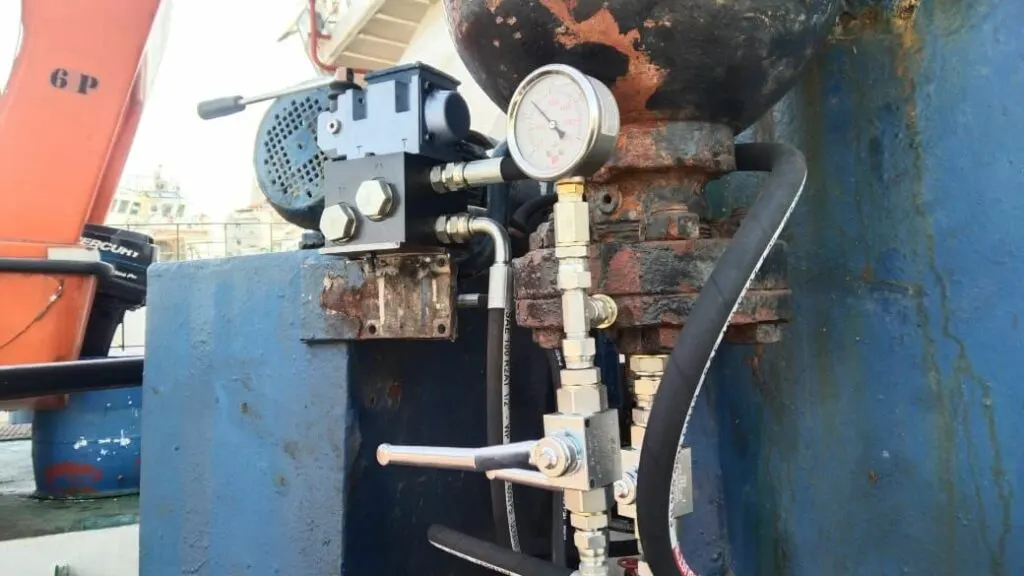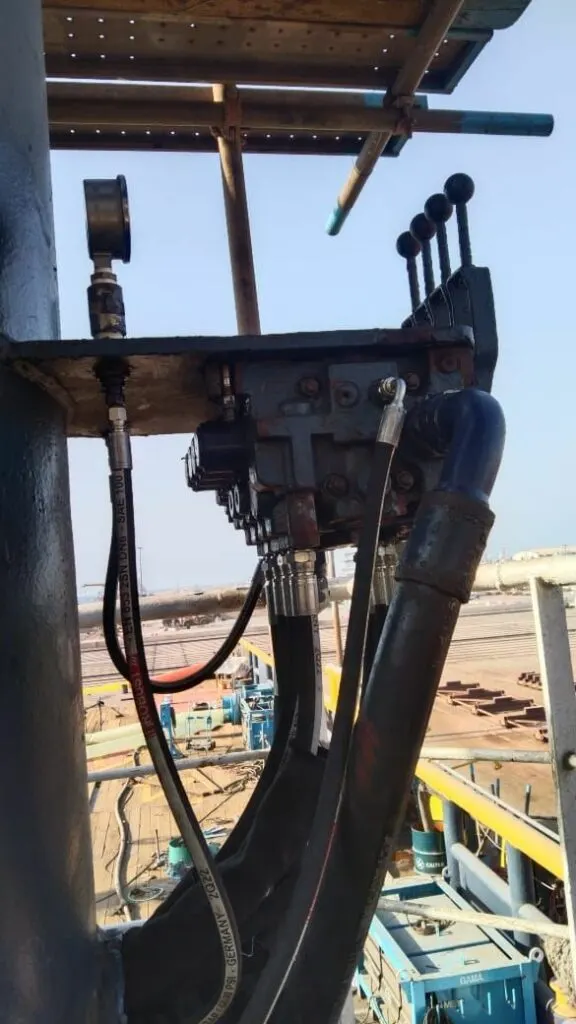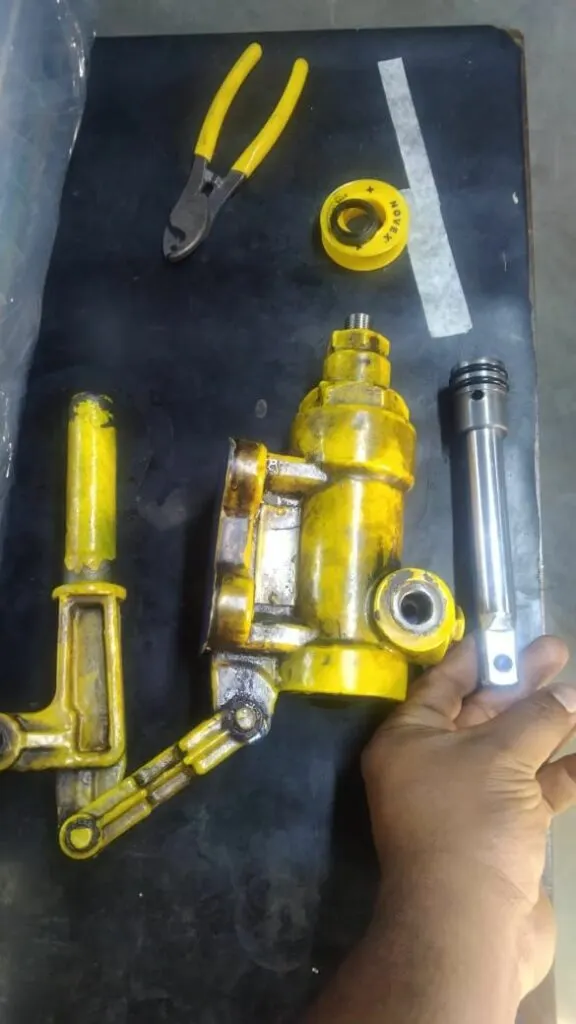
We repair Bosch Rexroth axial piston pumps and motors in our Sharjah workshop, including the A4VSO, A10VSO, A10VO, A11VO, A4VG, A2FO, A2FM and A6VM families used in industrial power packs, mobile plant and marine deck machinery. We are an independent repairer, not a Bosch Rexroth authorised service partner, so we give you the choice between repair with genuine or equivalent parts and a new or factory exchange unit.
The Rexroth units we see most
| Family | What it is | Where we find it |
|---|---|---|
| A4VSO | Variable swashplate pump, open circuit, high pressure, large sizes | Presses, steel plants, large ship and offshore HPUs |
| A10VSO / A10VO | Variable swashplate pump, open circuit, medium pressure | Industrial power packs, injection moulding, mobile plant, deck machinery HPUs |
| A11VO | Variable swashplate pump, open circuit, high pressure | Mobile cranes, drilling and piling rigs |
| A4VG | Variable swashplate pump, closed circuit | Hydrostatic drives on winches, drill rigs and mobile machines |
| A2FO / A2FM | Fixed bent-axis pump and motor | Winches, conveyors, slewing and travel drives, fan drives |
| A6VM | Variable bent-axis motor | Winches, travel drives, rotary heads |
How these pumps work, and where they wear
In a swashplate pump such as the A10VSO or A4VSO, a cylinder block carrying a ring of pistons turns against a stationary valve plate. Each piston has a slipper (shoe) that slides on the swashplate. Tilting the swashplate changes the stroke and so the flow, under the control of a compensator or electronic control. In a bent-axis unit such as the A2FM, the cylinder block sits at an angle to the drive shaft and the pistons are linked to the shaft flange.
The parts that wear are always the sliding faces:
- Slippers and swashplate. Worn or lifted slippers from contamination, overheating or cavitation. A slipper that lifts tears the swashplate face and the pump fails quickly.
- Cylinder block and valve plate. Scoring between them causes internal leakage, heat and loss of flow at pressure.
- Pistons and bores. Wear here also shows as high case drain flow.
- Swashplate bearings (the cradle bearings in the A10VSO and A4VSO) wear and change control behaviour.
- Shaft seal. Leaks are often a symptom of high case pressure from a restricted drain line, not the root cause.
- Bearings. Water in oil and misalignment of the drive coupling shorten their life.
- Controls. A sticking compensator spool, a worn orifice or a damaged control piston gives unstable pressure, hunting or no pressure control.
In the UAE the usual root causes are oil running too hot in summer (lower viscosity means thinner films on those sliding faces), dust ingress, and water from condensation. See hydraulic overheating in UAE heat and ISO 4406 oil cleanliness.
Symptoms that point to the pump
- Loud whine or rattle, especially on start-up. See noisy hydraulic pump.
- Slow functions at working pressure while light loads are fine.
- Oil temperature rising faster than before.
- High case drain flow, measured with a flow meter or by timing into a container under safe conditions.
- Pressure that hunts or will not reach the set value.
- Metal particles in the filter or the case drain.
Before removing the pump we check what we can on site: inlet conditions, case drain flow, compensator settings and the condition of the oil. A pump replaced into a system with a blocked suction strainer or dirty oil will fail again.
What to read off the nameplate
Rexroth nameplates carry the information we need to quote and source parts:
- Type code, for example a line beginning A10VSO 71 DFR1/31R followed by further letters and numbers. It encodes the family, size (displacement in cc/rev), control type, series, direction of rotation, shaft and mounting flange, and port version.
- Material number, the unique part number for that exact configuration.
- Serial number and production date.
Send a clear photograph of the whole plate. If the plate is painted over or missing, measure the shaft, flange and ports and tell us what machine it came from.
How we repair Rexroth units
- Inspection and report. We strip the unit, clean and measure the rotating group, valve plate, swashplate, bearings and control, and send a report with photographs and a quote.
- Repair. We replace the worn rotating group parts, valve plate, bearings and seals as needed, with genuine or equivalent parts, stated in the quote. Some parts can be lapped or reworked if wear is light.
- Control setting. Compensators and controls are set to the settings you give us or to the values recorded before strip-down.
- Test. The unit is tested before return and the results recorded.
Repair or exchange
Repair makes sense when the housing, shaft and swashplate are serviceable and parts are available at a sensible cost. Exchange makes sense when the housing is cracked, the shaft spline is badly worn, or the repair cost is close to a new or factory exchange unit. We tell you which applies after inspection, with a quote for both if we can source an exchange unit.