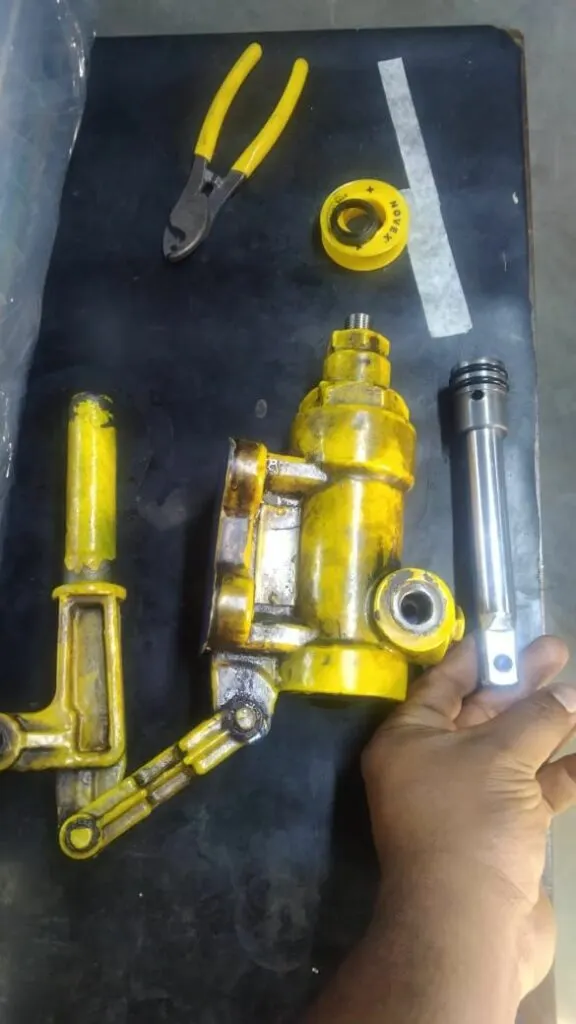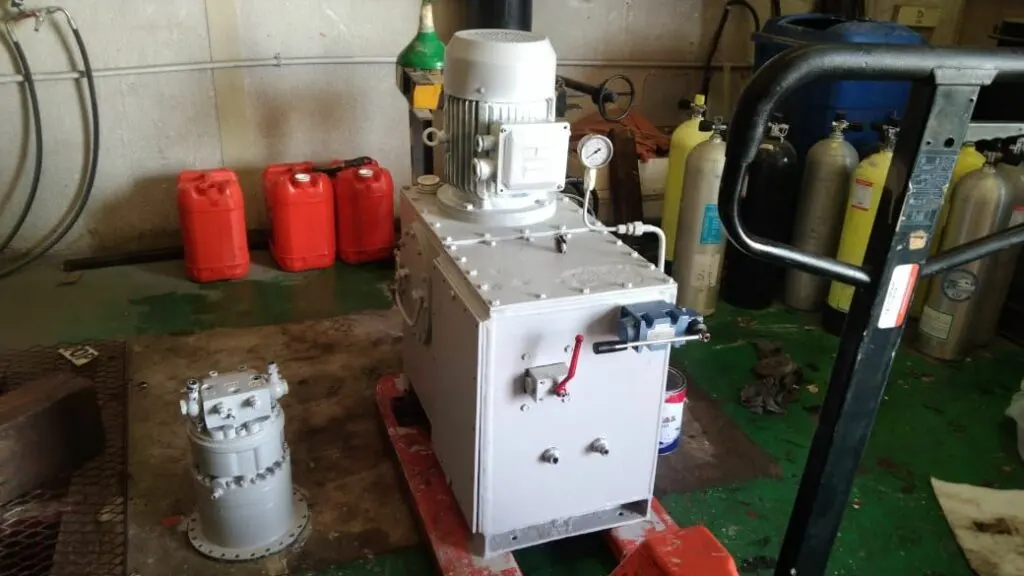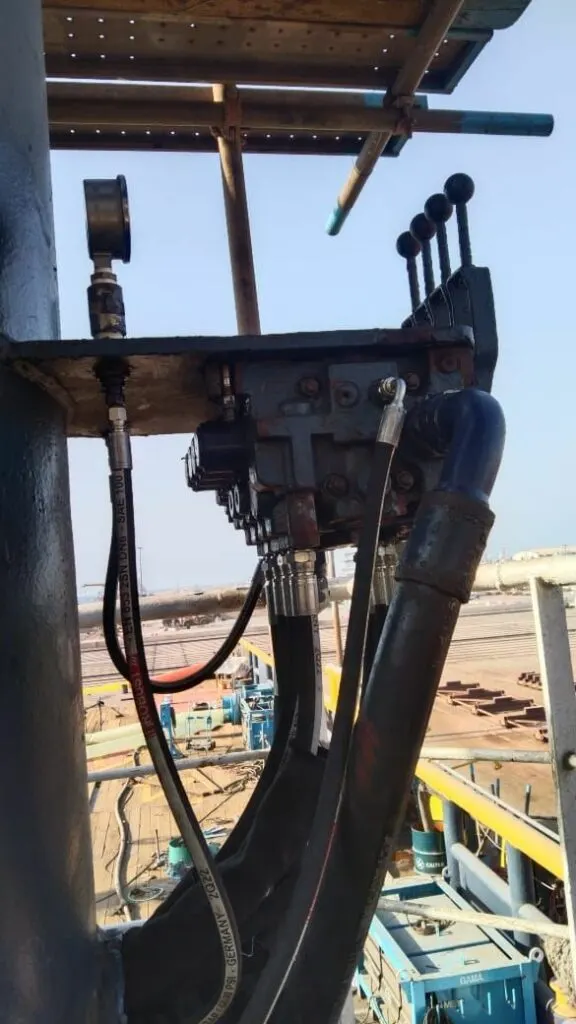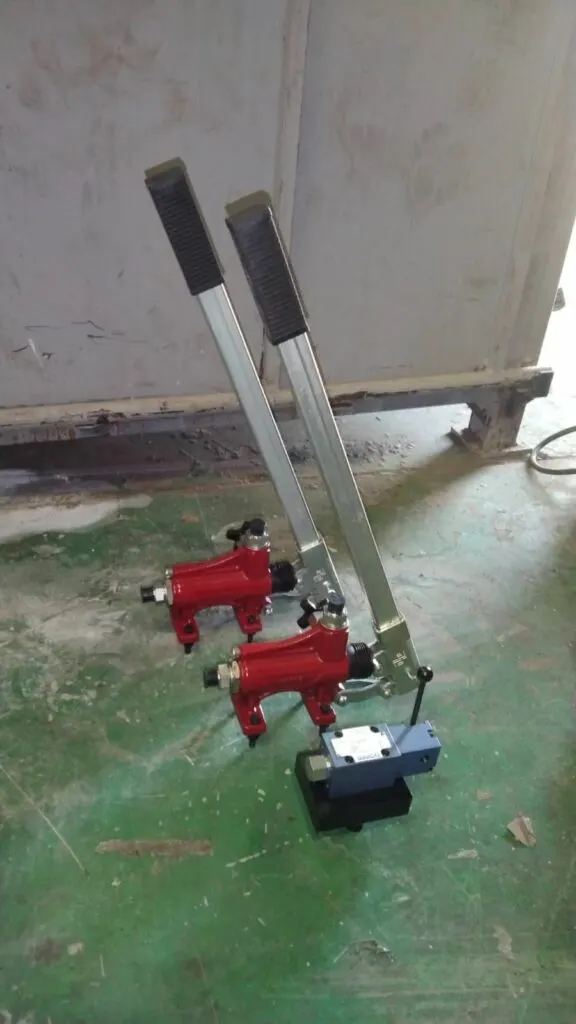
We repair Parker and Denison hydraulic pumps and motors, including Denison T6 and T7 vane pumps, Denison Gold Cup piston pumps and motors, Parker PV variable piston pumps and Parker bent-axis motors, used in ship power packs, steering gear, deck machinery and industrial plant. We are an independent repairer, not a Parker authorised service partner.
Parker and Denison
Parker bought Denison Hydraulics in the early 2000s, so Denison vane and piston pumps are now Parker products. Many older units in the UAE still carry the Denison plate, and newer ones the Parker name with the same series codes. Both are common in marine and industrial power packs because they are robust and tolerant of hard duty.
The units we see most
| Unit | What it is | Typical use |
|---|---|---|
| Denison T6 vane pumps (T6C, T6D, T6E, doubles such as T6CC, T6DC, T6ED) | Fixed displacement, high pressure vane pump with a replaceable cartridge | Ship and offshore HPUs, steering gear, deck machinery, presses |
| Denison T7 vane pumps | Newer high pressure vane series | Industrial and mobile power packs |
| Denison Gold Cup P-series pumps and motors | Heavy-duty piston units, often closed circuit | Winches, deck machinery, hydrostatic drives |
| Parker PV series | Variable swashplate piston pump, open circuit | Industrial power packs, presses, marine HPUs |
| Parker F11 and F12 | Bent-axis fixed motors and pumps | Winch, slewing and fan drives |
| Parker gear pumps | Fixed displacement gear pumps | Mobile plant, auxiliary circuits |
How vane pumps wear
In a T6 vane pump, a slotted rotor carries vanes that slide out against an elliptical cam ring. As the rotor turns, the chambers between vanes grow and shrink, drawing oil in and pushing it out through side plates. All the wear parts sit in a cartridge: cam ring, rotor, vanes and side plates.
Typical failures:
- Vane tip and cam ring wear, from contaminated oil. Flow falls and the pump runs hot.
- Cam ring rippling or chatter marks, from cavitation or aeration, usually caused by a restricted suction, low oil level or a leaking suction joint.
- Side plate scoring, giving internal leakage.
- Shaft seal leaks and bearing wear.
- Shaft failure, sometimes from misaligned couplings or shock loads.
The good news is that a worn T6 pump can often be restored by fitting a new cartridge kit, which is quicker and cheaper than a new pump, provided the housing and shaft are sound.
How piston pumps wear
Parker PV and Denison Gold Cup units are piston pumps with a cylinder block turning against a valve plate and pistons sliding on a swashplate or cam. The wear pattern is the same as in other piston pumps: slippers and swashplate, valve plate and cylinder block, piston bores, bearings, and the control (compensator or servo). Gold Cup units used in closed circuit also have a replenishing system that must be in good order.
Common symptoms: whine or rattle, falling efficiency and rising oil temperature, high case drain flow, and pressure that will not hold or hunts. See noisy hydraulic pump.
Checks before removal
- Suction conditions: oil level, strainer, suction line and joints.
- Case drain flow on piston pumps.
- Compensator and relief settings.
- Oil condition and temperature. In UAE engine rooms and plant rooms, high oil temperatures are common; see hydraulic overheating in UAE heat.
What to read off the nameplate
- Denison T6 and T7: the model code, for example T6C followed by the cartridge size number, shaft, rotation and port code, and for double pumps both cartridge sizes. Cartridge sizes tell us flow; the rest tells us shaft and ports.
- Gold Cup: the series (P6, P7, P8, P11, P14, P24, P30 and so on) and the full model code, which includes control options.
- Parker PV: the model code beginning PV with the size (for example PV046, PV092, PV140), followed by rotation, shaft, ports and control code.
- Serial number on all units.
If the plate is gone, send photographs of the pump, shaft and ports and tell us the machine it came from.
How we repair
- Strip, clean and inspect the cartridge or rotating group, shaft, bearings and controls, and measure the wear.
- Report and quote, with photographs and the options.
- Rebuild with a new cartridge kit or rotating group parts, seals and bearings, genuine or equivalent as stated in the quote.
- Set and test the control and test the unit before return.
Repair or exchange
Vane pumps are usually repaired with a cartridge kit unless the housing or shaft is damaged. Piston pumps are repaired when the housing, shaft and swashplate are sound and parts are available. Exchange is worth considering for obsolete series, cracked housings, or when the repair approaches the cost of a new unit. We quote both where we can.