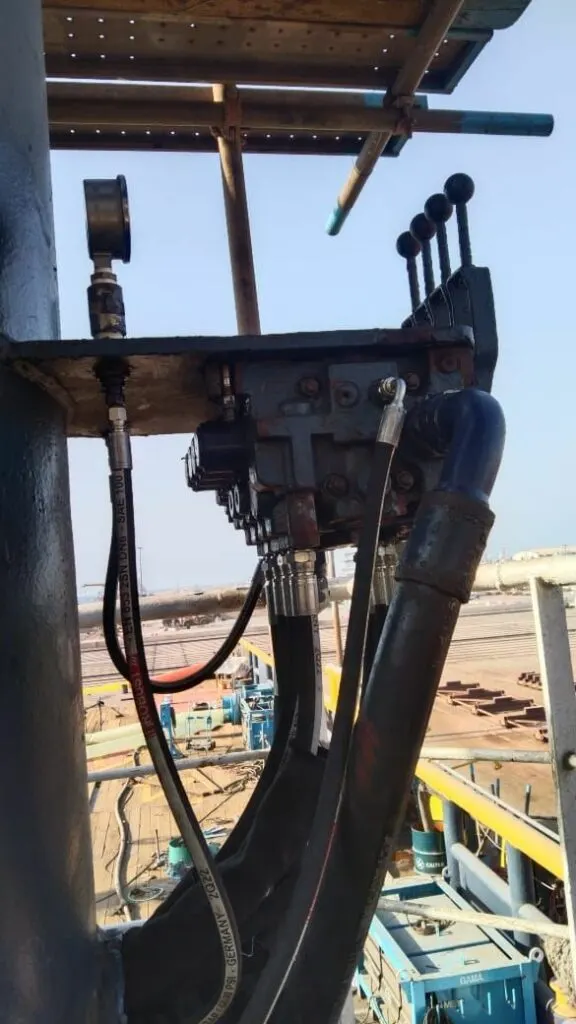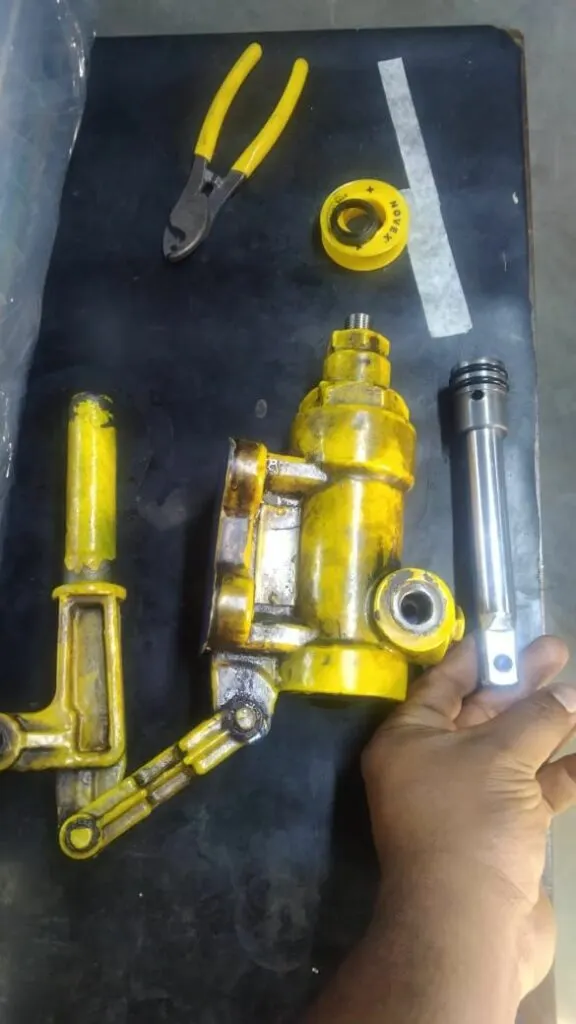
The cost and time of a hydraulic repair in the UAE are decided by five things: what is found inside the component once it is stripped, its size and weight, the access and removal needed to get it out, how quickly parts and machining can be sourced, and the testing and paperwork the job must close with. Urgency sits on top of all five. Parts found worn after strip-down are the biggest single reason a scope or a timeline moves.
This guide explains each factor from our own job records across marine, offshore and onshore work, and shows how to get an accurate quote as quickly as possible.
How each type of job is scoped
| Job | What the quote usually covers | What most often changes the scope |
|---|---|---|
| Hydraulic cylinder overhaul | Strip, measure, reseal, bench test at 1.5x working pressure | A pitted rod or scored barrel found on strip-down |
| Pump or motor overhaul | Strip, inspect, seals and bearings, test | Condition of the rotating group |
| Directional or counterbalance valve overhaul | Strip, clean, seals, bench test | Worn spools and bores, seal kit availability |
| VRCS actuator and leak campaigns | Survey, then a campaign by scope | Number of actuators, tubing, days on board |
| Power pack refurbishment | Clean, flush lines, oil, filters, pump and valve work, coupling | Pump and motor condition, cooler and tank work |
| Steering gear service | Inspection, oil, seals, pump or valve work, test | Rotary vane seal renewal, departure window |
| Crane and deck machinery repairs | From a single motor to a full crane overhaul | Number of components, lifting on deck |
| Load testing and certification | Water bags, load cell, engineer, certificate | Test load, radii, water supply, repairs before a pass |
| Lifeboat and rescue boat davit tests | Examination, test, report | Brake or hydraulic defects, fall wire renewal |
| Re-hosing programmes | Survey, make-up, fit, test, records | Number and size of hoses, special fittings |
| Engineer attendance | Troubleshooting, offshore, shutdown support | Access, duration, standby time |
| Wire rope renewal | Rope with certificates, fitting | Diameter, construction and length |
We focus on overhauls, load tests and planned work rather than single-hose call-outs. For one hose, a local hose shop will be quicker.
What drives cost and time
1. What is found inside
A quote before strip-down covers the expected scope. After strip-down, worn parts may be found:
- Rod pitted or bent: re-chrome or new rod
- Barrel scored: re-hone or new tube
- Pump rotating group worn: new pistons, valve plate or bearings
- Valve spool and bore worn: new section or valve
Good practice is a firm quote for the base scope and quoted options for likely extras, confirmed only after you see the inspection report. Machining such as re-chroming or honing also adds days, so the timeline is confirmed at the same point.
2. Size and weight
Large crane cylinders need lifting gear, long benches, more seal material and more machining time. A 250 mm bore luffing cylinder is a different job from a 63 mm davit cylinder.
3. Access and removal
- Scaffolding to reach a luffing cylinder or crane boom
- Removing a boom to reach a telescopic cylinder
- Confined spaces such as pump rooms and steering gear compartments
- Hot work permits (usually the owner’s scope on board)
4. Location and logistics
- Offshore attendance, anchorages and remote sites add launch, travel and standby time
- Weekend and night work
- Port passes and gate permits
- Overseas attendance adds travel, visas and accommodation
5. Parts sourcing
- OEM seal kits and spares for some European and Japanese brands can take weeks
- Obsolete equipment may need parts made to sample
- Urgent air freight shortens the wait but adds to the cost
6. Testing and documentation
- Bench tests are standard; class-witnessed tests need coordination with the surveyor
- Load tests need water bags and load cells, sized to the load
- Non-destructive testing of welds and pins on lifting appliances
7. Oil and consumables
- Oil changes on large systems: a crane holding several thousand litres needs a lot of oil
- Filters and breathers
8. Urgency
A breakdown that stops a vessel or a line means work out of hours, express parts and engineers pulled from planned jobs. Planned work in a drydock or shutdown window is almost always quicker to organise and easier on cost.
How to get an accurate quote fast
- Send good information first. Photos, nameplates, symptoms and how the equipment is used. See what to send for a quote.
- Say when you need it back. A sailing date, a survey or a shutdown window changes how we plan parts and people.
- Ask for options. Reseal only, reseal with rod, or new-build. Decide with the inspection report in hand.
- Batch the work. One mobilisation for several items is more efficient than several call-outs. For example, overhaul all the cylinders on a crane at once.
- Plan around drydock or a planned stop. Emergency work costs more and leaves less room to choose.
- Fix the cause. Overheating, dirty oil or a misaligned coupling will destroy the new parts too.
- Combine hydraulics and testing. One team for the repair and the load test avoids two mobilisations and finger-pointing.
Day rates versus a fixed scope
- A fixed scope suits defined work: overhaul a known cylinder, test a known crane.
- Day rates suit troubleshooting where the fault is unknown. The invoice follows the days actually spent, with a report of findings.
- Combined: troubleshooting at day rates, then a firm quote for the repair it reveals.
Repair versus replacement
Repair is usually the better value. Replacement can make sense when several major parts are worn, when the part is obsolete, or when downtime costs more than waiting for a repair. See repair or replace a hydraulic cylinder for the decision points.
Hidden costs of not repairing
- A leaking cylinder loses oil continuously; oil and clean-up cost money and create environmental risk on deck.
- A slow or drifting crane fails its load test and delays cargo.
- A worn pump makes heat, which ages oil, seals and hoses.
- Off-hire or plant downtime usually costs more per day than the repair.
When to call us
Send photos, nameplates and a description of the fault. We usually reply with a quote within one working day of receiving photos and nameplate data. For unknown faults, our engineer attendance is the quickest way to a firm scope, and for cylinder work see our cylinder repair service. The cylinder force and pump power calculators help confirm sizes before you order replacements.